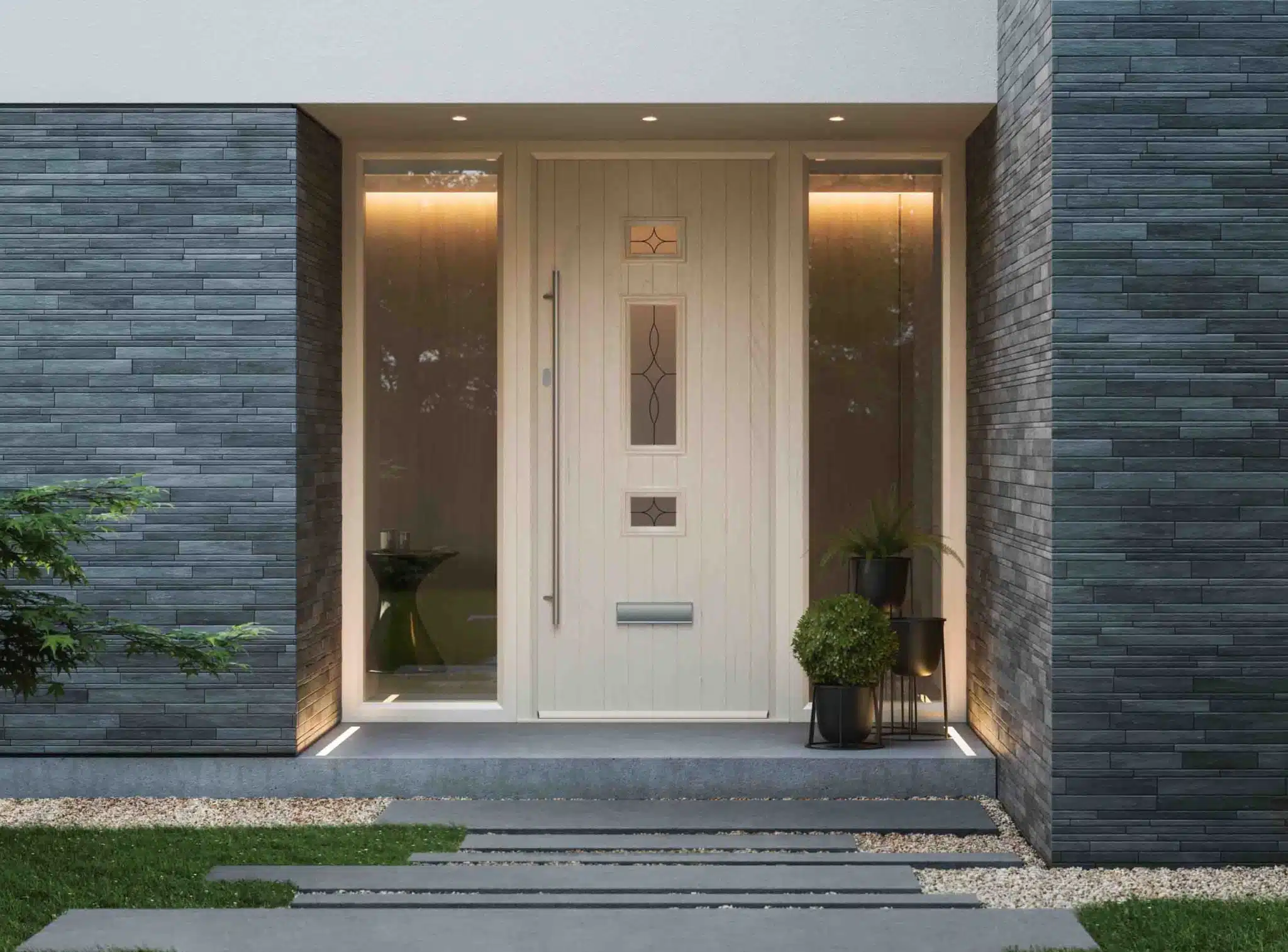
A properly specified composite door is very hard to kick in, because the security is in the whole system, not just the slab: a 44mm to 48mm solid core, a steel or glass-fibre reinforced frame, a multi-point lock that throws hooks and bolts into the frame, and a 3-star anti-snap cylinder that resists the most common attack of all. The test that proves it is PAS 24, and any door we fit across Cardiff and Caerphilly is built to meet it.
The honest answer is that no door is uncrackable, but the gap between a door that meets PAS 24 with a TS007 3-star cylinder and a cheap door with a basic euro cylinder is enormous. Most break-ins through a front door are not dramatic shoulder charges, they are quiet lock snaps that take seconds. Get the lock cylinder and the fitting right and you remove the easy option, which is what deters the opportunist standing on your step in Llanishen or Penarth.
Key takeaways
- PAS 24 is the UK security test doors must pass to count as secure, covering physical attack on the lock, hinges, glazing and frame.
- Most front-door break-ins are lock snaps, so a TS007 3-star anti-snap cylinder matters more than the slab thickness.
- Secured by Design is the police-backed standard that insurers and Building Regs Document Q recognise.
- A composite door and a good uPVC door can both be secure; the lock, frame and fit decide it, not the material name.
- Letterplates, glazing and hinge bolts are the weak points, so specify them, do not leave them to chance.
- Fitting is half the security; a PAS 24 door screwed into a poor frame is only as strong as the fixings.
| Want your front door checked in person? We survey doors free across Caerphilly, Cardiff and the Valleys, and tell you plainly whether your current setup is safe or where the weak points are. No pressure and no invented quote until we have measured. Book a free survey /contact/ |
Can a composite door actually be kicked in?
It is much harder than most people think. A composite door slab is usually 44mm to 48mm thick, built from a solid timber or foam core, an insulating layer and a tough glass-fibre reinforced (GRP) outer skin on both faces. That sandwich resists a boot far better than a hollow panel. The bigger factor is the lock: when the handle is lifted and the key turned, a multi-point mechanism throws hooks, rollers and deadbolts into a reinforced keep down the length of the frame, so the force of a kick is spread across several points rather than one weak latch.
Where doors fail is almost never the middle of the slab. They fail at the cylinder, the hinges or a poorly packed frame. That is why we talk about the door as a system. A strong slab bolted into soft packers or a frame that is not fixed properly into the structural opening will still give way. Fitting quality is the quiet half of the story, and it is the half a cheap online supply-only door leaves you to solve on your own.
For a wider look at how different doors compare on both light and security, our guide on bifold, sliding and French doors runs through the trade-offs on garden and patio openings.
What does PAS 24 actually test?
PAS 24 is the British publicly available specification that a door or window set has to pass to be classed as secure. It is not a marketing badge, it is a series of physical and manual attack tests carried out on a complete door in its frame, not just the slab on its own.
The assessment includes mechanical loading on the corners and locking points, manipulation tests on the cylinder and handle, and manual attack using tools you could buy in any hardware shop. The door has to hold for a set time against a determined attacker before it counts as a pass. Because the whole assembly is tested, PAS 24 tells you the hinges, keeps, glazing beads and cylinder all held together, which is exactly what you want to know.
- Cylinder and lock manipulation, including snapping, drilling and picking resistance
- Mechanical loading at the locking points and corners of the door
- Manual attack with common tools against the frame, hinges and glazing
- Removal resistance for the glazing beads so a pane cannot be popped out
Why PAS 24 on the whole door, not just the slab
A slab can be rated on its own and still sit in a weak frame. PAS 24 closes that loophole by testing the finished set. When we quote a door for a home in Cyncoed or Bargoed, PAS 24 is the baseline, not an upgrade, so you are not paying extra for security that should already be there.
What is Secured by Design and why do insurers ask for it?
Secured by Design is the official police security initiative for products and buildings. A door that carries Secured by Design accreditation has met PAS 24 and passed the police-recognised checks on top, so it is the standard many insurers and new-build specifications ask for by name.
It matters for two practical reasons. First, Building Regulations Document Q in England requires new dwellings to have doors and windows that resist break-in, and Secured by Design is the clearest way to show that. Second, some home insurance policies word their door requirements around recognised security standards, so having accredited doors can make a claim simpler and can support a better premium. Always read your own policy, but a door built to this level rarely counts against you.
Why does the cylinder matter more than the door?
If you only remember one thing, remember the cylinder. The single most common way through a modern front door is lock snapping, where the euro cylinder is gripped and snapped in two to expose the mechanism. A basic cylinder can go in seconds and leaves almost no noise or mess.
The answer is a TS007 3-star anti-snap cylinder, or a 1-star cylinder paired with 2-star security hardware to reach the same three-star total. These cylinders are built with sacrificial sections and hardened cores so that even when the outer part is snapped, the working part stays protected and the door stays locked. We fit 3-star cylinders as standard because it is the cheapest large gain in security you can buy.
Anti-snap, anti-drill, anti-pick and anti-bump
A good 3-star cylinder resists more than snapping. It includes anti-drill pins, anti-pick pins and anti-bump protection, so the quick and quiet methods are all closed off. If your current door is more than a few years old, upgrading the cylinder alone can transform its security, and it is often worth doing even while you plan a full replacement.
Composite or uPVC: which is more secure?
This is the wrong question, and asking it is how people end up overpaying or underspecifying. Both a composite door and a quality uPVC door can meet PAS 24 and carry a 3-star cylinder. Security comes from the lock, the frame reinforcement and the fit, not from the word on the brochure.
Where composite doors win is the balance of strength, insulation and looks. The solid core gives a reassuring weight and a low U-value, the GRP skin shrugs off knocks and weather, and the colour runs through the surface so scuffs do not show a different shade underneath. A uPVC door can be just as secure for less money, which is why we fit both and let the home and the budget decide. You can see the full range on our composite doors page and across the wider doors hub.
What about the weak points: letterplate, glass and hinges?
A secure door can still be let down by its accessories, so these are the details we specify rather than leave to chance. The letterplate is a classic target: a poorly placed flap lets someone fish for keys or reach the thumb-turn. We use letterplates positioned and cowled to block fishing, and we always advise keeping keys out of reach of the door.
Glazing is the next point. Any glass in or beside the door should be laminated so it holds together when struck rather than falling out, and the beads should be internal or security-clipped so a pane cannot be prised out from outside. Hinges on the exposed side need hinge bolts or dog bolts so the door cannot be lifted off even if the pins are attacked.
- Cowled or repositioned letterplate to stop key fishing and reach-through
- Laminated glass in sidelights and door glazing so it stays in the frame
- Internal or clipped glazing beads that cannot be removed from outside
- Hinge bolts on outward-facing hinges to defeat lifting attacks
Do composite doors warp, fade or drop over time?
A good composite door is very stable because the core resists the swelling and shrinking that affects timber. The GRP skin holds its colour well because the pigment is part of the material, so a south-facing door in Whitchurch will not bleach to a different shade the way a painted door can.
Doors do need the odd adjustment as a house settles, and hinges may need a small tweak-up after the first year, which is normal and quick. The bigger long-term risk is a cheap door hung badly, where a dropped slab starts to catch and the multi-point lock stops engaging cleanly. That is a security issue as much as a comfort one, and it is another reason fitting quality matters as much as the door you choose. Our notes on deposits and guarantees explain what a proper installer guarantee should cover.
What does a secure composite door cost in Cardiff and Caerphilly?
As a guide, a fitted composite front door to PAS 24 with a 3-star cylinder typically starts from around 1,200 pounds and rises with size, glazing, sidelights and colour. A plain solid door is at the lower end; a wide entrance with laminated glass sidelights and a decorative style sits higher. These are guide ranges, not a quote, because the survey drives the real figure.
It helps to see security and warmth as one purchase. A composite door with a solid core also brings a low U-value, so you are buying comfort and a lower heat loss at the same time as the lock. If you are weighing up a door alongside other openings, our piece on whether bifold doors feel cold shows how U-values work across door types.
How we fit and certify doors across South Wales
We are FENSA-registered, so every door we install is notified to Building Control and you receive the certificate that proves it. We survey, template and fit the frame square and packed correctly, then set and test the multi-point lock so every hook and bolt engages with a light lift of the handle.
We fit across Caerphilly, Cardiff, the Vale, Newport and the Valleys, from Victorian terraces in Cardiff to newer estates in Ystrad Mynach. If you would like a straight answer on your current door or a specification for a new one, book a free survey and we will bring samples and measure on site. You can also read about our Cardiff and Caerphilly coverage.
Worked examples
Worked example: a snapped cylinder in Cardiff
A homeowner in the Heath area of Cardiff called us after a neighbour was broken into through a snapped front-door lock. Their door slab was sound, but the original euro cylinder was a basic type with no anti-snap rating, sitting slightly proud of the handle plate, which is exactly what a snapping tool grips. We measured the cylinder to sit flush, fitted a TS007 3-star anti-snap replacement and added a security handle, all in under an hour.
The lesson is that the quickest and cheapest security win is the cylinder, not a whole new door. In this case the existing composite door was fine; it was the entry-level lock and the proud fitting that created the risk. We still recommended a full survey so nothing else was overlooked, but the immediate danger was closed the same morning.
Worked example: a family door with sidelights in Caerphilly
A family in Caerphilly wanted a wide, welcoming front entrance with glass sidelights to bring light into a dark hallway. Light and security can pull in opposite directions, so we specified laminated glass in the sidelights, internal glazing beads, a PAS 24 door set and a 3-star cylinder, then reinforced the frame around the wider opening so the extra span did not become a weak point.
The finished door looks generous and bright but tests as a secure set, because every added feature was matched with a security detail. That is the difference between buying a slab and buying a designed door: the trade-offs are handled at survey, not discovered after a break-in.
Security is one part of the price. Our guide to composite door prices in Cardiff breaks the rest down, and composite or uPVC front doors compares the two materials on security, warmth and cost.
Frequently asked questions
Are composite doors more secure than uPVC doors?
Not automatically. Both can meet PAS 24 and carry a 3-star anti-snap cylinder, so security comes from the lock, frame and fit rather than the material. Composite doors add a solid, weighty core and better insulation, which many buyers prefer, but a good uPVC door can be equally secure for less money.
What is a TS007 3-star cylinder and do I need one?
It is a euro cylinder that resists snapping, drilling, picking and bumping, the quick attacks used on most front doors. You reach three stars either with a 3-star cylinder alone or a 1-star cylinder paired with 2-star hardware. We fit 3-star cylinders as standard because it is the biggest security gain for the money.
Does PAS 24 mean the door cannot be broken into?
No door is impossible to breach, but PAS 24 means the complete door set held against timed manual and mechanical attack with common tools. It removes the easy, quiet methods a burglar prefers, which is what deters most attempts. Combined with a 3-star cylinder and good fitting, it makes your door a poor target.
Will a composite door lower my insurance or help a claim?
Some policies word their requirements around recognised security standards, so a PAS 24 door with a 3-star cylinder can make a claim simpler and can support your premium. Always check your own policy wording, but doors built to this level rarely count against you. Secured by Design accreditation is the clearest evidence to show.
Can I just upgrade the lock on my current door?
Often yes. If the slab and frame are sound, swapping a basic euro cylinder for a TS007 3-star anti-snap cylinder is a fast, affordable upgrade that closes the most common attack. We are happy to check whether that is enough or whether the wider door needs attention during a free survey.
Do composite doors fade or warp in the sun?
They hold up well. The colour runs through the GRP skin so scuffs do not reveal a different shade, and the solid core resists the swelling that affects timber. A door may need a minor hinge adjustment after the first year as the house settles, which is normal and quick to sort.
What about the glass next to the door?
Any glazing in or beside the door should be laminated so it holds together when struck, with internal or clipped beads so a pane cannot be prised out. We specify this as standard on sidelights and glazed doors, so extra light does not become a weak point in the security of the door.
| Get a straight answer on your door Whether you want a new composite door or a check on your current one, we will survey it free across Cardiff, Caerphilly and the Valleys, bring samples and give you a clear specification with PAS 24 and a 3-star cylinder as standard. Book when it suits you. Book a free survey /contact/ |