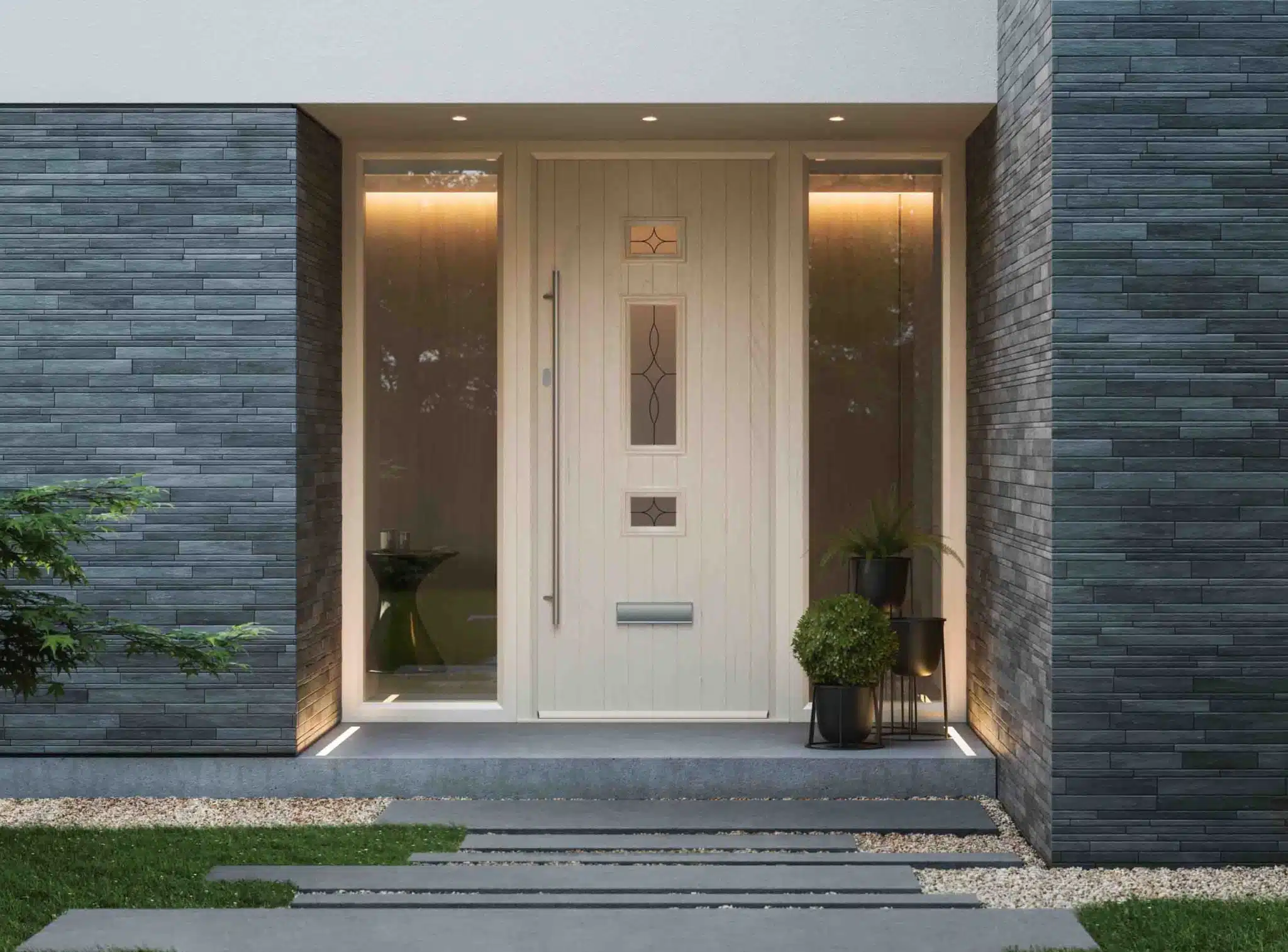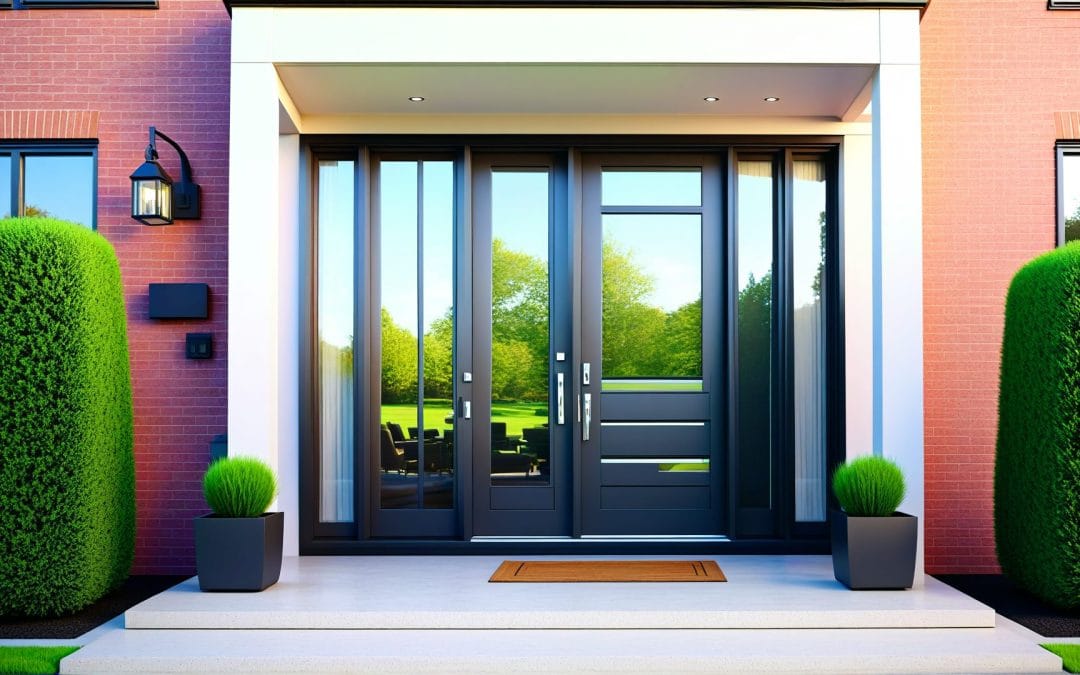
A modern, thermally broken aluminium bifold door is not cold in winter, because it is engineered to stop heat escaping: a polyamide thermal break splits the inside frame from the outside, the glass is low-emissivity double or triple glazing with a warm edge spacer, and a good set reaches a U-value around 1.4 W/m2K, well inside what Part L expects. The cold bifolds people remember are old, single-glazed or non-broken frames, not the energy-efficient bifold doors we fit today.
The short version is that the frame material and the glazing decide the answer, not the fact that it folds. Aluminium on its own conducts heat, so a cheap bifold with no thermal break will feel chilly and may show condensation on the frame. Get the thermal break, the glass spec and the fitting right, and a bifold in Penarth or Rhiwbina stays as warm as the wall around it, while still opening the whole back of the room to the garden.
Key takeaways
- Bifold doors are only cold if the frame has no thermal break or the glazing is poor; a modern set is warm.
- Aim for a U-value around 1.4 W/m2K for the whole door, which meets Part L for a replacement.
- The thermal break is a polyamide bar that stops heat crossing the aluminium frame from inside to outside.
- Double glazing with low-E glass and a warm edge spacer is usually enough; triple glazing helps in exposed spots.
- A well-fitted low threshold is not a cold spot when it is insulated and sealed correctly.
- Warmth and security go together: specify PAS 24 with anti-lift blocks and the door performs on both.
| Not sure your bifolds will be warm enough? We survey free across Caerphilly, Cardiff and the Valleys and talk you through frame, glass and threshold in plain terms, so you know the U-value you are buying before you commit. No invented quote until we have measured the opening. Book a free survey /contact/ |
Are bifold doors actually cold in winter?
A properly specified aluminium bifold is not cold. The reputation comes from two things: older aluminium frames with no thermal break, which conducted heat straight outside, and cheap sets with basic glazing. Both are avoidable. Today the frame is split by an insulating barrier, the glass is coated to reflect heat back into the room, and the gaps are sealed with brush and gasket seals along every leaf.
What you feel in a cold room is usually one of three things: a conductive frame, a weak glazing unit, or draughts through poor seals and a badly fitted threshold. Each of those is a specification or fitting choice, not an inherent fault of folding doors. Choose well and the door is warm; choose on price alone and it may not be.
If you are still deciding between door styles, our guide comparing bifold, sliding and French doors weighs warmth, light and space side by side.
What U-value should a bifold door hit?
The U-value measures how quickly heat passes through the door: the lower the number, the better the insulation. For a replacement door, Building Regulations Part L in England and Wales expects the whole door to reach 1.4 W/m2K or better, and that is the figure to hold suppliers to.
Be careful to compare the whole-door U-value, not just the centre-pane glass figure, because a good pane in a poor frame still loses heat at the edges. A quality thermally broken aluminium bifold with double glazing comfortably reaches around 1.4, and a triple-glazed set can go lower still. Ask for the whole-door number in writing so you are comparing like with like.
Whole-door U-value versus centre-pane
Some quotes flatter the glass by quoting the centre-pane U-value, which ignores the frame and edges. The number that matters for comfort and for Part L is the whole-door figure. When we quote a bifold for a home in Cyncoed or Barry, we give the whole-door U-value so there is no confusion about what you are actually buying.
What is a thermal break and why does aluminium need one?
Aluminium is strong and slim, which is why bifolds use it, but it also conducts heat well, so on its own it would carry warmth straight from your room to the cold outside. The thermal break solves that. It is a bar of polyamide, a tough insulating plastic, set between the inner and outer parts of the frame so heat cannot cross the metal in one piece.
This is the single most important part of a warm bifold. A non-broken aluminium frame will feel cold to the touch and can gather condensation on the inside in winter. A thermally broken frame stays close to room temperature on the inside face, which is what stops the draughty, chilly feeling near the doors.
Double or triple glazing for a bifold?
For most South Wales homes, good double glazing is the sensible choice: two panes with a low-emissivity coating, an argon gas fill and a warm edge spacer around the edge to cut heat loss where the panes meet the frame. That combination reaches the U-values Part L wants without the extra weight and cost of a third pane.
Triple glazing earns its place in exposed, windy spots or where a room faces a cold aspect and you want the warmest possible result. It adds weight, which matters on wide folding leaves, so it is a survey decision rather than a default. We will tell you honestly when triple glazing is worth it and when double glazing already does the job.
- Low-E coating to reflect heat back into the room
- Argon gas fill between the panes to slow heat transfer
- Warm edge spacer to reduce heat loss and cold-edge condensation
- Laminated glass option where security or safety needs it
Is the low threshold a cold spot?
A low or level threshold makes a bifold easy and safe to step over, which is one of the main reasons people choose them, and it does not have to be a cold spot. The trick is a thermally broken, insulated threshold that is bedded and sealed correctly into the floor build-up, with a weather seal that meets the bottom of the leaves.
Where cold and draughts creep in is a threshold dropped straight onto a cold slab with no insulation or a gap left under it. That is a fitting failure, not a fault of the design. We detail the threshold at survey, especially where a bifold opens onto a conservatory or an extension, so the floor line stays warm and dry. If you are adding doors as part of a garden room, our conservatories pages show how we handle those junctions.
Do bifolds get draughty over time?
A quality bifold holds its seal for many years because the gaskets and brush seals are designed to be compressed each time the door closes and locked tight by the multi-point mechanism. When you lift the handle and turn the key, hooks pull the leaves firmly against the seals all round, so the door is airtight when shut.
Draughts that appear over time usually trace back to a cheap track, worn rollers or a door that was never adjusted properly on fitting. Good hardware and a correct set-up prevent it, and a light service every few years keeps the rollers and seals in order. This is another reason to value the fit and the guarantee, not just the frame, as we explain in our note on deposits and guarantees.
Bifold or sliding: which keeps more heat in?
Both can be warm, and the honest comparison is closer than the sales talk suggests. A sliding door has fewer vertical frame joints across the opening, so it can show slightly more glass and fewer seals, while a bifold has more frames but folds fully back to open the whole wall. On U-value, a well-specified thermally broken example of either will meet Part L.
Choose on how you use the space rather than on tiny thermal differences. If you want the whole opening clear in summer, a bifold suits; if you want maximum glass and a big single pane view, an inline slider suits. Our patio and sliding doors page and the door comparison guide cover this in more detail.
Are energy-efficient bifolds still secure?
Warmth and security are not a trade-off; a good bifold delivers both. The sets we fit meet PAS 24, the UK security test, with a multi-point locking system, anti-lift blocks that stop the leaves being jemmied off the track, and laminated glass where needed. The same tight seals that keep heat in also help resist forced entry.
If security is high on your list, it is worth reading how the standards work across door types. Our guide on whether composite doors are secure explains PAS 24 and 3-star cylinders in full, and the same testing logic applies to the locking on a bifold.
What do warm bifolds cost around Cardiff and Caerphilly?
As a guide, a fitted thermally broken aluminium bifold to PAS 24 with a whole-door U-value around 1.4 typically starts from around 4,000 pounds for a three-leaf set and rises with width, the number of leaves, triple glazing and colour. A wide five or six leaf run across a large opening sits higher. These are guide ranges to help you plan, not a quote, because the size and threshold detail drive the real figure.
It helps to see the door as part of your home energy picture. New warm doors and windows lower heat loss together, and if you are also thinking about your energy rating, our guide on whether new windows improve your EPC shows how U-values feed into it. We fit across Caerphilly, Cardiff, Penarth, Barry and the Valleys, so ask us for the whole-door number in writing when you compare quotes.
Worked examples
Worked example: a cold non-broken bifold in Cardiff
A homeowner in Pontcanna, Cardiff, called us about a bifold that felt icy near the doors and streamed with condensation on the frame every winter morning. The set was older aluminium with no thermal break, so the metal was carrying heat straight outside and the inside face was sitting near the outdoor temperature, which is why moisture in the room condensed on it.
We replaced it with a thermally broken aluminium bifold, double glazed with low-E glass, argon and a warm edge spacer, giving a whole-door U-value around 1.4. The frame now stays close to room temperature on the inside, the condensation stopped, and the corner of the room that was avoided in winter became usable again. Nothing about the folding design was the problem; the missing thermal break was.
Worked example: a level threshold onto an extension in Caerphilly
A family in Caerphilly wanted a level threshold so a bifold could open flush onto a new garden extension without a step, but they were worried it would let cold in across the floor. At survey we detailed an insulated, thermally broken threshold bedded into the floor build-up, with the weather seal set to meet the bottom of every leaf.
The finished floor line runs warm and dry, the doors are easy to step over, and the seal locks down when the handle is lifted and the key turned. The lesson is that a low threshold is only a cold spot when it is fitted straight onto a cold slab; detailed properly, it stays as warm as the floor around it.
The bifold doors Daimant fits in Cardiff and Caerphilly use thermally broken frames. If you are still choosing a door type, our comparison of bifold, sliding and French doors sets the three side by side.
Frequently asked questions
Are bifold doors colder than normal doors?
Not when they are specified well. A thermally broken aluminium bifold with low-E double glazing reaches a whole-door U-value around 1.4, which meets Part L and feels as warm as a good patio or French door. The cold reputation comes from older frames with no thermal break, not from modern folding doors.
What U-value should I ask for on a bifold?
Ask for a whole-door U-value of 1.4 W/m2K or better, not just the centre-pane glass figure. The whole-door number includes the frame and edges, which is what Part L judges and what decides real comfort. A quality double-glazed set meets this, and triple glazing can go lower in exposed spots.
Do I need triple glazing to keep a bifold warm?
Usually not. Good double glazing with a low-E coating, argon fill and a warm edge spacer reaches the U-values Part L wants for most homes. Triple glazing is worth it in very exposed or cold-facing spots, but it adds weight to wide leaves, so it is best decided at survey rather than as a default.
Is the low threshold going to let cold in?
Not if it is fitted correctly. A thermally broken, insulated threshold bedded into the floor with a proper weather seal stays warm and dry. Cold and draughts only appear when a threshold is dropped onto a bare slab with no insulation, which is a fitting failure rather than a fault of the design.
Will a bifold get draughty as it ages?
A quality set holds its seal for years because the gaskets are compressed and locked tight by the multi-point mechanism every time you close it. Draughts usually mean a cheap track, worn rollers or a poor initial set-up. Good hardware and a light service every few years keep it airtight.
Are energy-efficient bifolds still secure?
Yes. The bifolds we fit meet PAS 24 with multi-point locking, anti-lift blocks that stop the leaves being levered off the track, and laminated glass where needed. Warmth and security are not a trade-off, and the same tight seals that keep heat in also help resist forced entry.
Bifold or sliding door for warmth?
Both can be warm, and a well-specified thermally broken example of either meets Part L. A slider shows slightly more glass with fewer joints, while a bifold folds the whole wall open. Choose on how you use the space rather than tiny thermal differences, because the specification matters far more than the mechanism.
| See the U-value before you buy We will survey your opening free across Cardiff, Caerphilly, Penarth and the Valleys, explain the frame, glass and threshold in plain terms, and put the whole-door U-value in writing so you know your bifolds will be warm. Book a visit whenever suits you. Book a free survey /contact/ |