If you live in Cardiff, the right windows, doors and conservatory depend far more on the age of your house than on any trend, and Cardiff’s housing stock splits neatly into Victorian terraces, 1930s semis and modern new-builds, each with its own answer. As a family-run, FENSA-registered installer based just up the road in Caerphilly, we fit across every Cardiff suburb, so this guide maps the sensible choice to each house type and street. To talk through your own property, book a free survey and we will bring samples to the door.
Below we walk through Canton and Pontcanna terraces, Rhiwbina and Whitchurch semis, Llanishen and Cyncoed family homes, and the newer flats around Cardiff Bay, covering what suits each, where conservation rules bite, and roughly what a fair local job costs. Everything routes back to our Cardiff service area so you can see that we genuinely cover your part of the city.
Key takeaways
- Cardiff housing splits into Victorian terraces, 1930s semis and new-builds, and each suits different products.
- Conservation areas in Pontcanna, Canton and parts of Cyncoed shape what windows officers will accept.
- Flush sash and vertical sliding sash windows suit period terraces; casements suit most semis.
- Composite doors are the popular secure choice across Cardiff, from Canton to Llanishen.
- A LEKA warm-roof conservatory or orangery works well on the larger gardens of Rhiwbina and Cyncoed.
- We are Caerphilly-based and FENSA-registered, and we cover every Cardiff suburb.
| A local survey, at your Cardiff address We survey across every Cardiff suburb from Canton to Cyncoed, bringing window, door and roof samples so you can see the finish in your own light. It is free, and there is no obligation to proceed. Book a free survey /contact/ |
Who fits windows and doors across Cardiff?
We do, from our base in Caerphilly, and we cover the whole of Cardiff along with the Vale and Newport. Being a short drive from the city means our surveyors know the streets, the house types and the conservation areas, so the advice you get is grounded in what actually works on Cardiff homes rather than a generic sales script. Every replacement window and external door we fit is FENSA-registered and logged to your address.
Cardiff is a city of distinct suburbs, and the right specification changes as you move across it. A terrace in Canton has different needs from a semi in Whitchurch or a new-build flat near Cardiff Bay. The rest of this guide takes the main house types in turn so you can find yours and see the sensible options, with links out to the full windows, doors and conservatories ranges.
What suits a Victorian terrace in Canton or Pontcanna?
Cardiff’s Victorian terraces, common through Canton, Pontcanna and Cathays, were built with timber sliding sash or tall casement windows and deep bay fronts, so the aim is to keep those proportions while gaining modern warmth and security. A uPVC vertical sliding sash window with slim sightlines and optional sash horns keeps the period look, and a flush sash casement, which sits flat within the frame in the old timber style, is a strong alternative for the sides and rear.
Many of these streets fall within conservation areas, and parts of Pontcanna and Canton carry extra controls, so the window style can matter to the council as well as to you. Our guide to sash windows in a conservation area explains what officers usually accept and when consent is needed. On the door, a composite front door in a heritage colour with the right furniture keeps the character while adding a modern lock.
Do conservation rules apply to my street?
Some do and some do not, even within the same suburb. An Article 4 direction can remove permitted development rights for front windows in a conservation area, which means you may need consent for a change of style or material. We check the position for your specific address as part of the survey, so you are not guessing before you order.
What works on a 1930s semi in Rhiwbina or Whitchurch?
The interwar semis of Rhiwbina, Whitchurch and Llanishen usually have bay fronts and were built for casement windows, so A-rated uPVC casements are the natural fit and the popular choice. They suit the proportions, deliver low U-values, and keep costs sensible across a full house. Where a homeowner wants something a little more refined for the front bay, a flush sash casement lifts the look without changing the character of the street.
These homes often have good-sized rear gardens, which makes them ideal for a set of bifold or sliding doors opening onto the garden, or for a conservatory or orangery. If you are weighing a garden room against a full extension, our conservatory, orangery and extension comparison sets out the value and planning trade-offs. A composite door completes the upgrade at the front, and you can see the security detail in our composite range.
- A-rated casement windows suit the bay fronts of most 1930s semis.
- Flush sash casements refine the look on a front bay.
- Bifold or sliding doors open the rear onto a typical semi garden.
What about larger family homes in Llanishen and Cyncoed?
The bigger detached and semi-detached homes of Llanishen and Cyncoed give you more scope, both in glazing and in garden rooms. Casement windows remain the workhorse, but tilt and turn windows are worth considering upstairs because they clean from inside and tilt for safe ventilation, which suits family homes with children. Where the property has generous grounds, a larger LEKA warm-roof conservatory or an orangery turns unused garden into a room used all year.
Cyncoed in particular has pockets with conservation controls and a mix of house ages, so the right answer varies street by street. Composite doors are the standard secure front-door choice here, and for wider openings at the rear a set of bifold doors or inline sliding doors brings the garden inside. Everything we fit is FENSA-registered and logged to your Cardiff address for resale.
What suits new-builds and flats around Cardiff Bay?
The newer apartments and houses around Cardiff Bay and the city’s regeneration areas were built to current energy standards, so the job here is usually replacing failed sealed units, upgrading tired hardware, or fitting doors that were value-engineered on the original build. Tilt and turn windows are common in flats because they clean safely from inside and can be fitted with restrictors, which matters above ground level.
For balconies and courtyard gardens, a compact sliding or bifold door makes the most of the space without a door swing eating into the room. New-builds rarely sit in conservation areas, so you have a free hand on style, and the priority is a good U-value, a PAS 24 security rating and a guarantee you can rely on. Our composite door security guide explains what to look for on the lock and cylinder.
Which doors are most popular across Cardiff?
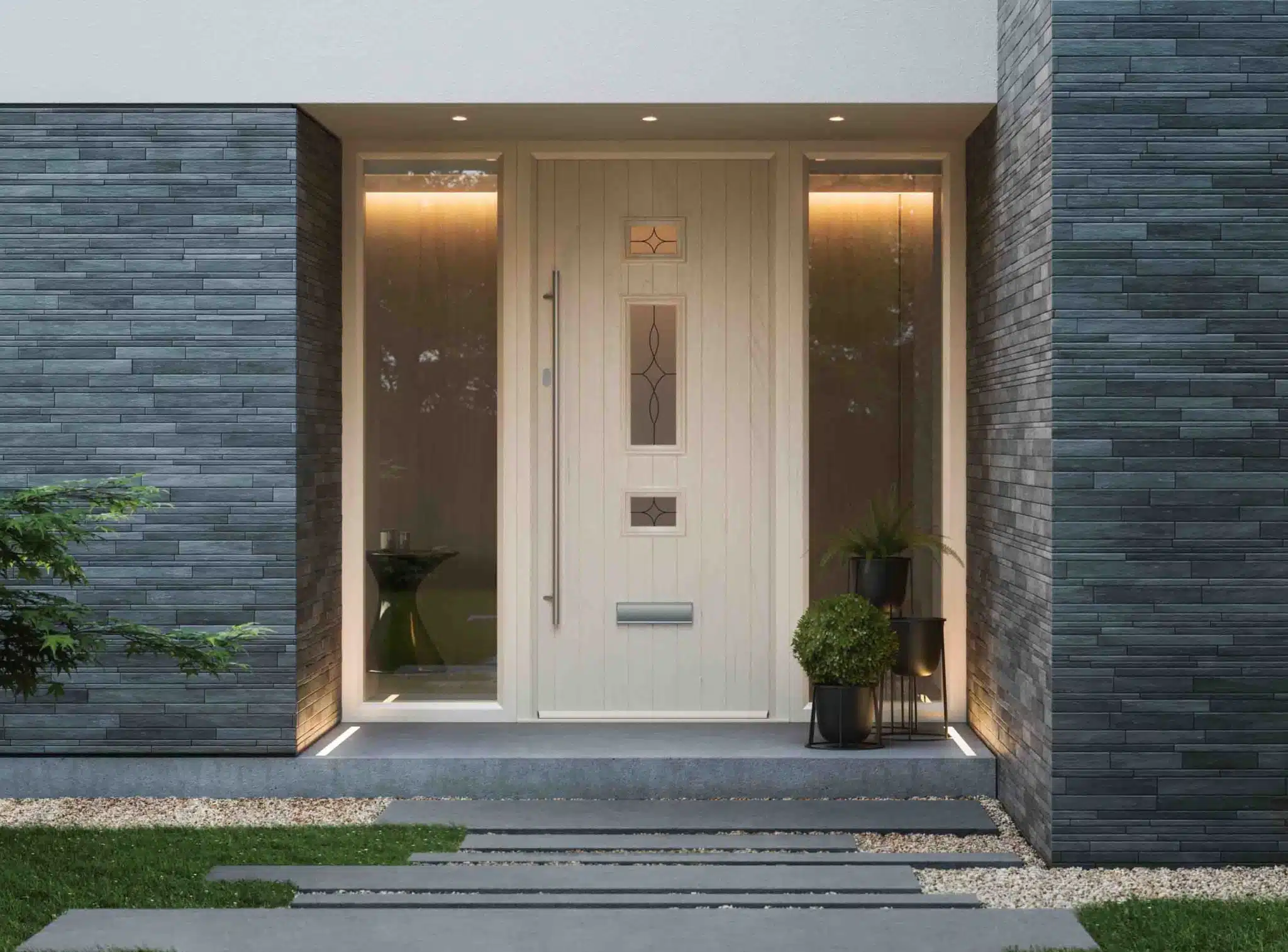
The composite door is the most popular front door across Cardiff, from the terraces of Canton to the semis of Whitchurch, because it combines a solid timber-core feel with a low-maintenance GRP skin and a multi-point lock. For the rear, the choice is between bifold doors that fold right back, inline sliding doors that give a big clear pane, and French doors that suit a narrower opening. Each has its place depending on the wall width and how you use the garden.
For a period terrace, a composite door in a heritage colour keeps the character while adding modern security. For a family semi with a wide rear wall, bifolds or a large slider open the room to the garden. Browse the full doors range to compare, and see finished Cardiff installations in our project gallery before you decide.
- Composite doors: the popular secure front-door choice citywide.
- Bifold doors: fold fully back for a wide rear opening.
- Sliding and French doors: suit narrower openings and courtyard gardens.
What do windows, doors and conservatories cost in Cardiff?
Prices depend on size, spec and access, but as a local guide an A-rated casement window starts from around 500 pounds fitted, a composite front door from around 1,200 pounds fitted, and a set of bifold doors from around 3,500 pounds fitted, all as guide ranges rather than fixed quotes. A LEKA warm-roof conservatory is a bigger project and is best priced against your actual base and size at survey.
Cardiff jobs can carry small extras where access is tight on a terraced street or where a conservation area requires a particular style, so a written survey is the only way to get a firm figure. We give you a clear quotation that lists the glazing spec, the U-values, the security rating and the guarantee, with no pressure to decide on the day.
How long are lead times, and how do you book?
Typical lead times run from a few weeks for standard windows and doors to longer for a made-to-measure conservatory, and we confirm the timeline in writing once the survey is done and the order is placed. Because we are based in Caerphilly, we are on Cardiff streets most days, which keeps surveys and fits easy to arrange around you.
Booking is simple. Tell us your suburb and your house type, we arrange a free survey at a time that suits, and we bring samples so you can see the finish in your own light. From Canton to Cyncoed and Cardiff Bay to Rhiwbina, we cover the whole city, and everything routes through our Cardiff service page.
Worked examples
Worked example: a Victorian terrace in Canton
A three-bed Victorian terrace in Canton, Cardiff, sits within a conservation area with an Article 4 direction on the front elevation. The owners want to keep the period look but end the draughts and the rattle. We specify uPVC vertical sliding sash windows with slim sightlines and sash horns for the front bay, matching the original proportions, and flush sash casements to the rear where controls are lighter.
Because the front sits in a conservation area, we check the consent position as part of the survey rather than assuming permitted development applies. The composite front door is chosen in a heritage colour with traditional furniture. The full job comes in as a written quote with the glazing spec, U-values and a ten-year guarantee set out clearly, and every window is FENSA-registered to the address for resale.
Worked example: a 1930s semi in Rhiwbina
A 1930s semi in Rhiwbina, Cardiff, has tired timber casements on a bay front and a good-sized rear garden. The owners want warmth, low maintenance and a better connection to the garden. We fit A-rated uPVC casement windows throughout, with a flush sash detail on the front bay to lift the look, and a set of bifold doors across the rear to open the kitchen to the garden in summer.
As a guide, the eight casements come in from around 4,500 pounds fitted and the bifolds from around 3,500 pounds fitted, with figures confirmed at survey. The homeowner receives a FENSA certificate a few weeks after the fit, a transferable ten-year guarantee, and a written spec they can hand to a buyer. The whole project is arranged from our Caerphilly base, a short drive from the door.
For how we work across the city, see Daimant in Cardiff. Price bands are set out in our guides to window replacement costs and conservatory prices in Cardiff.
Frequently asked questions
Do you cover my Cardiff suburb?
Yes. We cover the whole of Cardiff from our Caerphilly base, including Canton, Pontcanna, Rhiwbina, Whitchurch, Llanishen, Cyncoed and Cardiff Bay, along with the Vale and Newport. Tell us your suburb and house type when you book and we will arrange a free survey.
What windows suit a Cardiff Victorian terrace?
Vertical sliding sash windows with slim sightlines and sash horns keep the period proportions of a Canton or Pontcanna terrace, while flush sash casements suit the sides and rear. Many of these streets are in conservation areas, so we check the consent position for your address at the survey.
Can I fit new windows in a Cardiff conservation area?
Usually yes, but the style and material may need to match the character, and an Article 4 direction can mean you need consent for changes to the front. We check the rules for your specific street as part of the survey so you know where you stand before ordering.
Which front door is most popular in Cardiff?
The composite door is the popular choice citywide because it combines a solid timber-core feel with a low-maintenance GRP skin and a multi-point lock. It suits period terraces in a heritage colour and modern semis and new-builds in a wide range of styles.
Do you fit conservatories on Cardiff homes?
Yes. The larger gardens of suburbs like Rhiwbina, Llanishen and Cyncoed suit a LEKA warm-roof conservatory or an orangery, which stay usable all year. We price these against your actual base and size at the survey rather than giving a headline figure.
Are you FENSA-registered?
Yes. Daimant is a FENSA-registered installer, so every replacement window and external door we fit in Cardiff is self-certified against Building Regulations and logged to your address. You receive a FENSA certificate after the work, which a buyer’s solicitor will ask for at resale.
| Get a Cardiff survey booked From Canton terraces to Cyncoed family homes and Cardiff Bay flats, we fit windows, doors and conservatories that suit your house and your street. We are family-run, FENSA-registered and based in Caerphilly, a short drive away. Book a free survey and we will bring samples to your Cardiff address. Book a free survey /contact/ |