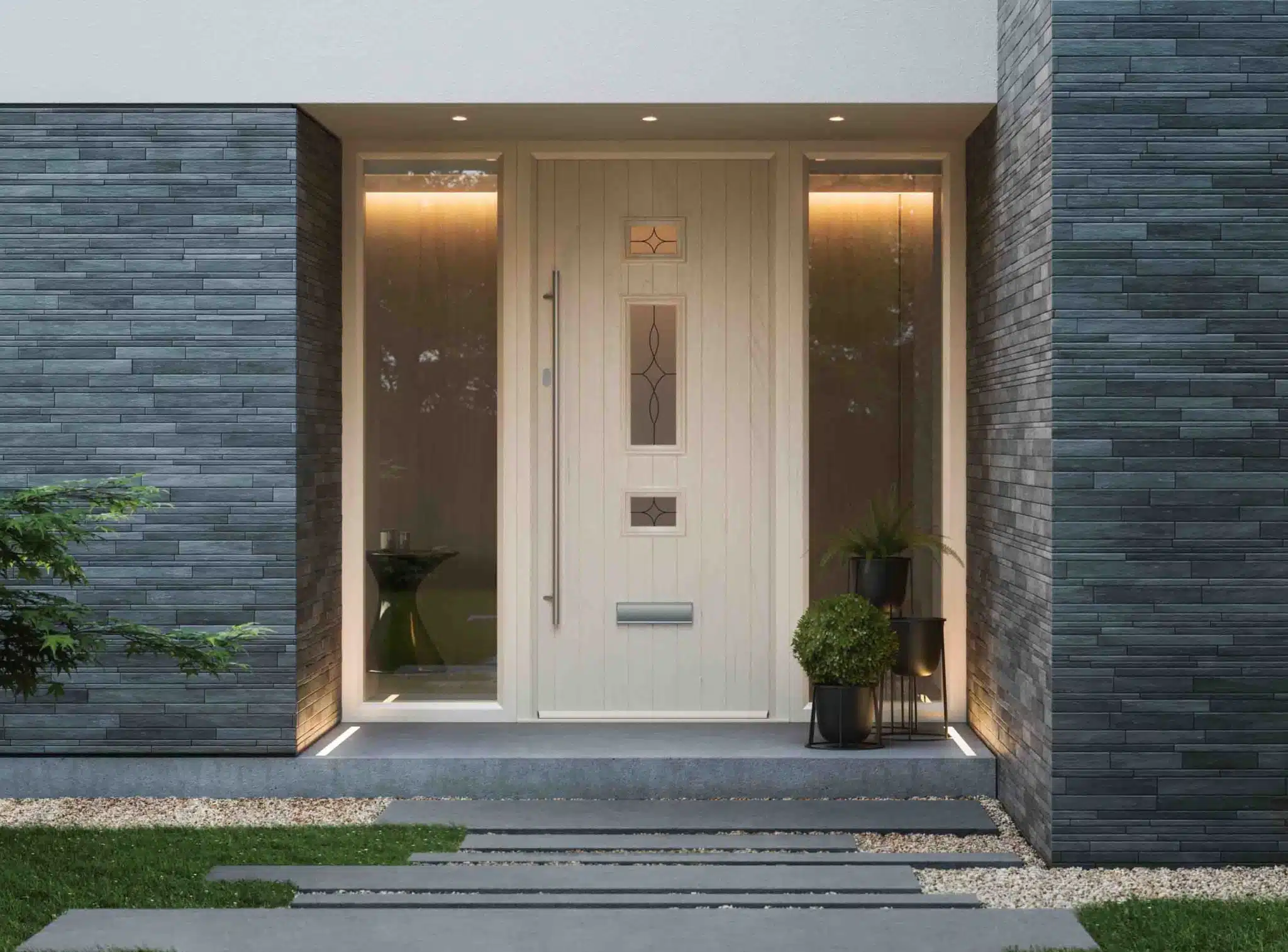
For most South Wales homes, an orangery tends to add the most value of the three, because it reads as a genuine room while costing less than a full brick extension. A conservatory is the cheapest and quickest way to add light and space, an orangery is the warm, brick-and-glass middle ground, and a single-storey extension is the most expensive but the closest match to normal living space in valuation terms. The right choice depends on your budget, your house and how you want to use the room.
This guide compares all three on the things that actually decide it: cost, warmth, planning, and what each does to your resale value and EPC. We build conservatories and orangeries across Cardiff and Caerphilly, so the examples come from real South Wales homes rather than a brochure.
Key takeaways
- A conservatory is mostly glass, quickest to build and the lowest cost of the three.
- An orangery mixes brick pillars and a flat perimeter roof with a glazed lantern, so it feels like a room.
- A single-storey extension is fully solid, the most expensive and the closest match to internal living space.
- For value per pound spent, an orangery often wins on a mid-value South Wales home.
- Warmth follows the roof and glazing spec more than the label on the build.
- Planning and building regulations get stricter as you move from conservatory to extension.
| Want to see which one fits your home and budget? We design conservatories and orangeries to suit the house and the street, and we will tell you honestly when a full extension is the better call. Book a free design visit and get options costed for your property. Book a free design visit /contact/ |
What is the actual difference between a conservatory, an orangery and an extension?
The three sit on a spectrum from mostly glass to fully solid. A conservatory is predominantly glazed, with a glass or solid roof and slim frames, built off a lightweight base. An orangery keeps large glazed sections but adds brick or rendered pillars, a solid flat perimeter roof and a glazed lantern or roof light in the centre, so it feels more like part of the house. A single-storey extension is a solid-walled, solid-roofed room that matches the main building, usually with standard windows and doors set into masonry.
The lines blur in the middle, which is why the labels matter less than the specification. A modern warm-roof conservatory with brick to sill level can feel close to an orangery, and a glazed-gable orangery can feel close to a conservatory. What separates them in practice is how much solid structure you have, how the room holds heat, and how the finished space is likely to be valued.
What is a modular orangery?
A modular orangery uses a factory-made structural system for the roof and pillars rather than full traditional bricklaying for every element. It gives you the orangery look, brick pillars, a flat perimeter roof and a central lantern, with a faster, more predictable build. It is a sensible middle option for homeowners who want the orangery feel without the timescale of a fully bespoke masonry build.
Which one adds the most value to a South Wales home?
Valuers reward usable, year-round space that feels part of the house. On that measure a poorly specified glass conservatory adds the least, because buyers see it as a summer room. An orangery adds more, because the brick pillars and solid roof perimeter make it read as a proper room while keeping the cost well below a full extension. A single-storey extension usually adds the most in raw valuation, but it also costs the most, so the value per pound spent is often lower than an orangery.
In parts of Cardiff such as Cyncoed and Whitchurch, and in family areas around Caerphilly, the sweet spot for return tends to be a warm, well-built orangery or a warm-roof conservatory that a buyer can picture using in January. A RICS valuation looks at comparable sales, condition and how the space functions, not at the label. Get the warmth and finish right and the room counts; get it wrong and it is discounted. Our Cardiff guide looks at what works on different Cardiff house types.
How do the costs compare?
Cost rises as you add solid structure. As a guide, and every home differs, a quality conservatory typically starts from the lower end, an orangery sits in the middle, and a single-storey extension is the most expensive because of foundations, masonry, roofing and internal finishing. These are broad bands to help you plan rather than fixed prices, and a survey is the only way to get a real figure.
The cheapest option is not always the best value. A budget conservatory that ends up too hot in summer and too cold in winter can go unused, which is money spent for little gain. Spending a little more on a warm roof or an orangery that the family uses all year usually pays back better in daily use and at resale. If you already have a tired conservatory, replacing the roof can be a lower-cost route to a room that works, which we cover in our conservatory roof replacement cost guide.
- Conservatory: lowest cost, quickest build, from around the lower band fitted as a guide.
- Orangery: mid cost, brick pillars and lantern roof, strong value per pound.
- Single-storey extension: highest cost, full masonry, closest to standard living space.
- Warm roof upgrade to an existing conservatory: often the cheapest way to gain a year-round room.
Which is the warmest to live in all year?
Warmth is decided by the roof and the glazing, not by the name. An old conservatory with a polycarbonate roof loses heat fast and overheats in summer through solar gain. Swap that for a solid warm roof and the same footprint becomes usable in winter. A quality warm-roof system can reach a roof U-value of around 0.15 W/m2K, which is close to a modern extension roof, so a warm-roof conservatory or orangery can be nearly as comfortable as a solid build.
An orangery has an edge over a basic conservatory because its solid perimeter roof and brick pillars add thermal mass and reduce the all-glass greenhouse effect, while the central lantern still floods the room with light. A single-storey extension is warmest by default because it is fully insulated masonry, but you pay for that in cost and in lost light unless you design in generous glazing. If your current room swings between freezing and boiling, our guide on why that happens, a conservatory too hot or too cold, explains the fix.
The LEKA warm roof option
The LEKA warm roof is a lightweight insulated roof system we fit to conservatories and orangeries. It gives the thermal performance of a solid roof without the full weight of a tiled roof, which often means the existing base and frames can carry it after a structural check. It is a practical way to turn a cold glass box into a room the family uses through the Welsh winter.
Do the planning rules differ between them?
Broadly, the more solid the build, the more likely you are to need approvals. Most conservatories and many orangeries fall under permitted development if they stay within the depth, height and footprint limits, so they need no planning application. A single-storey extension can also be permitted development within those limits, but because it is larger and fully solid it more often bumps into them, and it always engages building regulations.
Building regulations are where the three diverge most. A glazed conservatory under 30 square metres, separated from the house with its own heating, is often exempt from full building control. An orangery with a substantial solid roof, and any extension, generally needs building regulations sign off for structure and for Part L thermal performance. Conservation areas and listed buildings tighten all of this. We set out the detail in our conservatory planning permission guide, which covers Cardiff Council and Caerphilly CBC.
None of this should put you off. It simply means an orangery or extension needs a bit more paperwork, which a proper installer handles for you as part of the job.
What impact does each have on your EPC and council tax?
An EPC rates the whole dwelling, so adding heated space that meets modern thermal standards can help your rating, whereas bolting on a leaky glass box that you then heat can drag it down. A warm-roof conservatory, an orangery or an extension built to current Part L standards adds insulated area that behaves well in the assessment. That matters for landlords under minimum energy standards and for anyone thinking about resale.
On council tax, adding an extension or a substantial orangery does not automatically move your band while you own the home, but a material extension can trigger a revaluation when the property is next sold. A standard conservatory rarely changes the band on its own. The value uplift from a well-built room usually outweighs the tax consideration, but it is worth knowing so nothing takes you by surprise.
Which suits your house and your street?
House style should steer the choice. On a period property in Penarth or a character street in Cardiff, an orangery with brick pillars often sits more comfortably than an all-glass conservatory, because it echoes the masonry of the original house. On a 1930s semi or a newer estate home in Caerphilly or Ystrad Mynach, a clean warm-roof conservatory or a modest orangery can look right and use the garden well.
Think about the room’s job, too. If you want a dining room or snug used every day, lean towards an orangery or extension for the warmth and solid ceiling. If you want a bright garden room and a lower budget, a warm-roof conservatory does the job. We look at the house, the aspect, the garden and the street before recommending anything, which is the point of the free design visit. You can browse finished projects on our conservatories pages for ideas that suit South Wales homes.
How do you decide?
Run the decision through four questions and the answer usually appears. First, budget: what can you comfortably spend, and does the value uplift justify it. Second, use: is this a year-round room or a summer space. Third, house: what will look right and value well on your property and street. Fourth, rules: what will planning and building regulations allow without a fight.
For a lot of Cardiff and Caerphilly homes, the honest recommendation lands on a warm-roof conservatory or an orangery, because they hit the best balance of cost, warmth and value. Where the budget and the house support it, a full extension is the premium answer. There is no single right choice, only the right choice for your home, which is exactly what we help you reach.
- Budget: conservatory lowest, orangery middle, extension highest.
- Warmth: driven by roof and glazing spec, so a warm roof closes the gap.
- Value: orangery often best per pound; extension highest in raw terms.
- Rules: get stricter as you move towards a full extension.
Worked examples
Worked example: choosing between an orangery and an extension in Cyncoed
A family in Cyncoed wanted a bigger kitchen-diner and were torn between a single-storey extension and an orangery. The extension quote was the highest, and the build would have taken the longest and reduced natural light at the back of the house. The orangery, with brick pillars to match the existing house and a central lantern roof, came in noticeably lower, kept the room bright, and still read as a proper room for valuation. They chose the orangery, built it to modern thermal standards so it helped rather than hurt the EPC, and used it year round. For their goals, the orangery gave more usable value for the money.
Worked example: rescuing a cold conservatory in Caerphilly
A homeowner in Caerphilly had a ten year old conservatory with a polycarbonate roof that was unusable in winter and stifling in summer, so they were considering knocking it down for an extension. Instead we fitted a LEKA warm roof after a structural check confirmed the base and frames could take it. The room became warm enough to use as a snug through winter, at a fraction of the cost of a new extension, and without the planning steps a full rebuild would have needed. Sometimes the best value is not a new build at all but a smarter roof, which is why we always look at what you already have first. Compare the numbers in our roof replacement cost guide.
Each option has its own page: orangeries built by Daimant, LEKA XI modular extensions and the price bands in our guide to conservatory costs in Cardiff.
Frequently asked questions
What is the main difference between a conservatory and an orangery?
A conservatory is mostly glass with slim frames and a light base. An orangery adds brick or rendered pillars and a solid flat perimeter roof with a central glazed lantern, so it feels more like a room and holds heat better. The orangery costs more but usually adds more value.
Which adds the most value, an orangery or an extension?
An extension usually adds the most in raw valuation because it matches internal living space, but it costs the most. An orangery often gives the best value per pound spent on a mid-value South Wales home, because it reads as a proper room at a lower cost.
Is an orangery warmer than a conservatory?
Generally yes, because the solid perimeter roof and brick pillars add thermal mass and cut the all-glass overheating, while the lantern keeps the light. That said, a warm-roof conservatory can be nearly as comfortable, since warmth depends mostly on the roof and glazing spec.
Do I need planning permission for an orangery?
Often not, if it stays within permitted development limits on depth, height and footprint and the home is not listed or in a conservation area. Building regulations are more likely to apply than for a simple conservatory because of the solid roof. Always confirm with your council first.
Will any of these help my EPC rating?
A warm-roof conservatory, orangery or extension built to modern Part L standards adds insulated space that behaves well in the assessment and can help your rating. A leaky, heated glass box can lower it, so specification is what decides the outcome.
Is a warm roof cheaper than building an extension?
Usually yes by a wide margin. Fitting a warm roof to an existing conservatory turns a cold room into a year-round one at a fraction of the cost of demolishing and building a new extension, and often without the same planning steps.
How long does each take to build?
A conservatory is the quickest, often a few weeks. An orangery takes a little longer because of the brickwork and lantern. A single-storey extension takes the longest due to foundations, masonry and internal finishing. A survey gives a firm timescale for your project.
| Get honest options costed for your home Conservatory, orangery or extension, we will show you what suits your house, your budget and your street across Cardiff and Caerphilly, and we will say when a warm roof beats a rebuild. Book a free design visit, or explore our [[orangeries|/conservatories/orangeries/]] and [[conservatories|/conservatories/]] first. Book a free design visit /contact/ |