Your conservatory boils in summer and freezes in winter because a standard glass or polycarbonate roof lets heat flood in whenever the sun is out, then lets it escape just as quickly on a cold night. The fastest lasting fix is to change the roof, usually to an insulated LEKA warm roof, so the room holds a steady temperature you can actually live in through the year.
We fit conservatories and replacement roofs across Caerphilly, Cardiff and the South Wales Valleys, and the temperature complaint comes up more than any other. The good news is that it is almost always fixable, and you rarely need to knock the whole thing down to sort it. This guide explains what is really going on above your head, walks through every option from cheap tweaks to a proper insulated roof, and shows you two real cost and comfort examples so you can judge what is worth doing.
Key takeaways
- Overheating and heat loss usually come from the roof, not the walls or the frames.
- Polycarbonate and single glass roofs are the worst offenders for both problems.
- Blinds, film and fans reduce the symptoms but never fully cure them.
- An insulated warm roof gives the biggest and most permanent improvement.
- A lower U-value means less heat lost, so year round use becomes realistic.
- Book a free survey so we can measure your actual roof before quoting.
| Find out what your conservatory really needs We will measure the roof, check the existing base and frames, and tell you honestly whether a warm roof, new glazing or a simple upgrade is the right call. No pressure, no invented figures. Book a free survey /contact/ |
Why does my conservatory get so hot in summer and so cold in winter?
The room swings between extremes because the roof behaves like a giant collector of heat that cannot store or hold it. On a bright day the sun pours energy straight through the glazing, a process called solar gain, and the air inside climbs far above the rest of the house within an hour or two. That same lightweight roof has almost no insulation, so once the sun drops the warmth escapes back out through it just as fast, and by evening the space feels colder than the garden.
Two things make it worse. First, glass and polycarbonate have very little thermal mass, meaning they neither soak up spare heat in the day nor release it slowly at night the way a brick wall does. Second, most older conservatories were built to a lighter standard than the rooms they join, so there is no buffer between you and the weather. The frames and the dwarf wall play a small part, but in the vast majority of homes we survey around Caerphilly and Cardiff, the roof is the culprit.
- Solar gain through the roof drives the summer overheating.
- Poor insulation in the roof drives the winter heat loss.
- Low thermal mass means the room reacts fast to any change outside.
Is it the roof or the glass causing the problem?
In most cases it is the roof, and by a wide margin. A conservatory roof is the largest surface exposed to the open sky, so it takes the full force of the sun in July and radiates the most heat away in January. The side glazing matters, but the vertical windows catch far less direct sun than the sloped panels above them, and modern sealed units in the walls are usually the least of your worries.
You can test this yourself on a hot afternoon. Stand in the room and notice where the heat feels strongest. Almost everyone reports that it pours down from above rather than in from the sides. On a cold night, do the reverse and feel how quickly the warmth vanishes upward. If your walls already have decent double glazing, spending money on new side windows will barely move the needle while the roof stays the same. That is why we always start any survey by looking up.
When the frames are worth upgrading too
There are exceptions. If your conservatory is twenty or more years old with tired single glazed or early double glazed side panels, replacing those units alongside a new roof gives a bigger overall gain. We often pair a warm roof with A rated windows when the frames are past their best, and if you are already thinking about the whole house you may want to read our guide on whether new windows will improve your EPC before deciding.
Polycarbonate vs glass vs a warm roof: what actually changes?
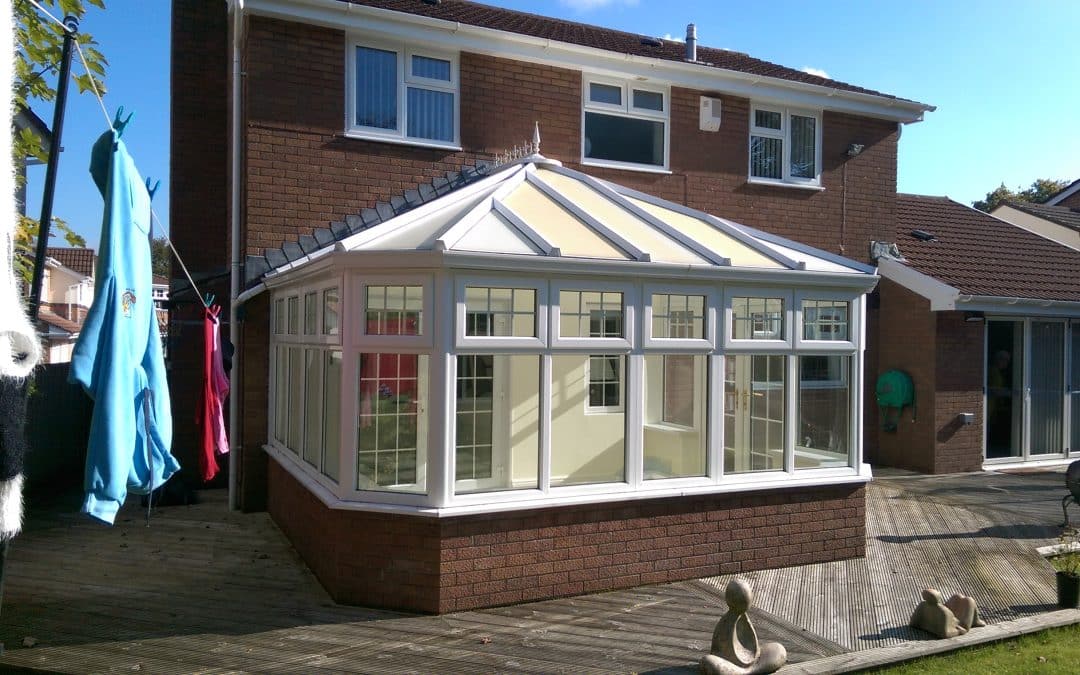
These three roof types behave very differently, and knowing the difference saves you money. Polycarbonate is the thin, twin or multi wall plastic sheeting fitted to millions of conservatories from the 1990s onward. It is cheap and light, but it insulates poorly, drums loudly in the rain and lets heat through in both directions, so it is the worst performer for comfort.
A glass roof with a modern sealed unit is a step up. Good self cleaning, solar control glass cuts some of the glare and the summer heat, and it looks smart. It still leaves you with a fully transparent roof though, so on the hottest and coldest days the room remains hard to control, just less severely than polycarbonate.
A warm roof, sometimes called a solid or tiled roof, replaces the transparent panels with an insulated structure finished in lightweight tiles outside and a plastered ceiling inside. A system like the LEKA warm roof can reach a U-value around 0.15 W/m2K, which is close to a proper house extension and dramatically better than any glazed roof. That is the change that turns a seasonal room into an everyday one.
- Polycarbonate: cheapest, noisiest, worst for heat and cold.
- Glass: better looking and better than plastic, still a glass roof.
- Warm roof: insulated, quiet, the biggest comfort gain by far.
Can I fix the temperature without a full rebuild?
Yes, and you have a ladder of options depending on budget. At the cheap end, fitted roof blinds, reflective window film and a ceiling fan will take the edge off the summer heat, and thick thermal blinds slow the winter losses a little. These help, but they treat the symptom rather than the cause, and they do nothing for the drumming rain or the fundamental lack of insulation.
The middle option is to swap a polycarbonate roof for a solar control glass one, which improves comfort without changing the shape of the room. The strongest fix, and the one we recommend most often, is to keep your existing walls, floor and frames and simply replace the roof with an insulated warm roof. You get a plastered, insulated ceiling, far steadier temperatures and a quieter room, all without the disruption or cost of demolishing and rebuilding.
Because a warm roof reuses the existing base and frames, it is usually far cheaper than a new conservatory or an extension. If you are weighing the numbers, our guide on conservatory roof replacement cost breaks down the bands in detail, and you can see the full range of options on our conservatories page.
What does it cost to heat a conservatory all year?
With a glazed or polycarbonate roof, the honest answer is a lot, and often for a room that still never feels comfortable. Heat escapes through the roof almost as fast as your radiator or electric heater can put it in, so on a cold January evening you can run a heater flat out and still feel a chill. Many homeowners simply give up and shut the door to the room for half the year, which means they paid for floor space they cannot use.
An insulated roof changes the maths. Once the largest heat loss surface is properly insulated, a modest amount of heating holds the room at a steady temperature, and it stays usable in the depths of winter as well as on mild spring days. You are no longer fighting a roof that dumps your warmth into the sky. The exact saving depends on how you heat the space and how you use it, which is why we prefer to look at your setup on a survey rather than promise a specific figure.
Does a warm roof really stop the temperature swings?
It comes closer than anything else, and the difference is obvious the first time you stand under one. By replacing a transparent roof with an insulated structure, a warm roof cuts the solar gain that causes summer overheating and slashes the heat loss that causes winter cold. The plastered ceiling also removes the greenhouse feel, so the room reads as a genuine part of the house rather than a glass box bolted onto the back.
There is a trade off worth understanding. A solid roof lets in less overhead light than a fully glazed one, so we usually design in roof windows or glazed panels to keep the space bright while still gaining the insulation. On the many roofs we have replaced across Cardiff suburbs like Rhiwbina and Llanishen, and out towards Penarth and Barry, homeowners tell us the room finally feels calm and steady rather than either stifling or freezing.
Will I need building regulations or planning permission?
Changing a conservatory roof to a solid, insulated one usually falls under building regulations because you are altering the thermal element of the structure, and the work needs to satisfy the relevant Part L and structural requirements. It rarely needs full planning permission, but there are exceptions in conservation areas and for listed buildings. We handle the building control side as part of the job, and you can read more in our guide on conservatory planning permission.
What is a U-value and why does it matter here?
A U-value measures how quickly heat passes through a surface, and lower is better. It is written in W/m2K, and it tells you exactly why your current roof struggles. Old polycarbonate can sit well above 2.0, a decent glass roof unit lands somewhere lower but still transparent, and a modern insulated warm roof can reach around 0.15, which is in the same territory as a well built house extension.
That single number explains the whole story. The higher the U-value, the faster your expensive heat leaks away in winter and the faster unwanted heat pours in during summer. Dropping the roof from a figure above 2.0 down towards 0.15 is the reason a warm roof transforms the room while blinds and film only nibble at the edges. When we survey your conservatory in Caerphilly, Cardiff or anywhere across Gwent and the Valleys, the U-value of your existing roof is the first thing we assess.
Which fix suits your conservatory?
Match the fix to how you want to use the room. If you only need to soften the odd hot afternoon and you are on a tight budget, blinds, film and a fan are a fair starting point. If your roof is tired polycarbonate and you want real year round comfort, an insulated warm roof gives the largest and most permanent improvement, and it usually costs a fraction of a full rebuild because your base and frames stay put.
If your frames are also failing, combine a warm roof with new A rated side glazing for the best result. And if you are genuinely outgrowing the footprint, it may be worth comparing a roof upgrade against a larger project, which we cover in our guide on conservatory versus orangery versus extension. Where the room is sound but the roof is not, a straight conservatory roof replacement is almost always the smarter spend. Whatever direction you lean, the only way to price it properly is to have someone measure the actual structure.
Worked examples
Worked example: a 1990s polycarbonate conservatory in Rhiwbina
A family in Rhiwbina had a three by four metre conservatory with an original brown tinted polycarbonate roof. In summer it hit uncomfortable temperatures by mid morning and they kept the doors shut; in winter it was so cold they used it for storage rather than living. Blinds had helped a little but the room was still effectively lost for most of the year.
We kept the existing dwarf wall, floor and side frames, and replaced only the roof with an insulated LEKA warm roof reaching a U-value around 0.15, adding two roof windows to keep the light. As a guide, a roof swap of this size starts from around a few thousand pounds fitted, but the exact figure always comes from a survey. The result was a plastered, insulated ceiling and a room the family now use as a second sitting area through the whole year.
Worked example: choosing glass over solid in Penarth
A couple in Penarth loved the bright, open feel of their glazed conservatory and did not want to lose the sky view, but they found it too hot in summer. Rather than a full warm roof, we specified a solar control glass roof that reflects a large share of the sun’s heat while staying fully transparent, paired with a discreet ventilation upgrade.
This did not match the insulation of a solid roof, and we were clear about that from the start, but it suited their priorities and budget while noticeably taming the summer peaks. It shows why we never push a single answer. As a guide the cost sat between a blind package and a full warm roof, and the right choice came down to how they wanted to use the room rather than a fixed rule.
A roof that leaks as well as overheating needs a closer look first. Our page on conservatory repairs in Caerphilly and Cardiff explains when a repair is enough and when replacing the conservatory roof is the better spend.
Frequently asked questions
Is it the roof or the windows making my conservatory too hot?
In almost every conservatory we survey it is the roof. The roof is the biggest surface facing the open sky, so it collects the most solar gain in summer and loses the most heat in winter. Upgrading side windows helps only a little while a transparent roof stays in place.
Can I put a solid warm roof on my existing conservatory?
Usually yes. A warm roof reuses your existing base, dwarf wall and side frames, so we replace only the roof structure. We check that the base and frames can carry the new load during the survey, and we handle the building control side as part of the work.
Will a warm roof make the room too dark?
Not if it is designed well. A solid roof lets in less overhead light than a glass one, so we usually add roof windows or glazed panels to keep the room bright. You gain the insulation while keeping a comfortable level of natural light.
How much does it cost to fix a hot or cold conservatory?
It depends on the fix. Blinds and film are the cheapest, a solar control glass roof sits in the middle, and an insulated warm roof gives the biggest improvement. As a guide a warm roof costs far less than a rebuild, but we only quote a real figure after measuring your roof.
Do blinds or reflective film solve the problem?
They reduce the symptoms rather than cure them. Blinds and film cut some summer glare and heat, and thermal blinds slow winter losses slightly, but they do nothing about the poor insulation of the roof itself. For year round comfort you need to address the roof.
Do I need planning permission to replace the roof?
Replacing a conservatory roof with an insulated one usually falls under building regulations rather than full planning permission. Conservation areas and listed buildings are exceptions. We manage the building control approval for you as standard, so you do not have to chase the council yourself.
Which is better, a glass roof or a solid warm roof?
A solid warm roof insulates far better and gives the steadiest temperature, reaching a U-value around 0.15. A solar control glass roof keeps the open sky view and tames summer heat but cannot match that insulation. The right choice depends on whether you value light or all year comfort more.
| Turn a wasted room into your favourite one Whether you need a full warm roof, new glazing or a simpler upgrade, we will measure your conservatory in Caerphilly, Cardiff or across the Valleys and give you honest advice and a real quote. Book a free survey and we will tell you exactly what your room needs. Book a free survey /contact/ |