Discover premium composite front doors engineered by Door-Stop and expertly installed by Daimant Windows. We serve Cardiff, Caerphilly, Newport, and all surrounding areas with doors that blend high-security, energy-efficiency, and modern style.
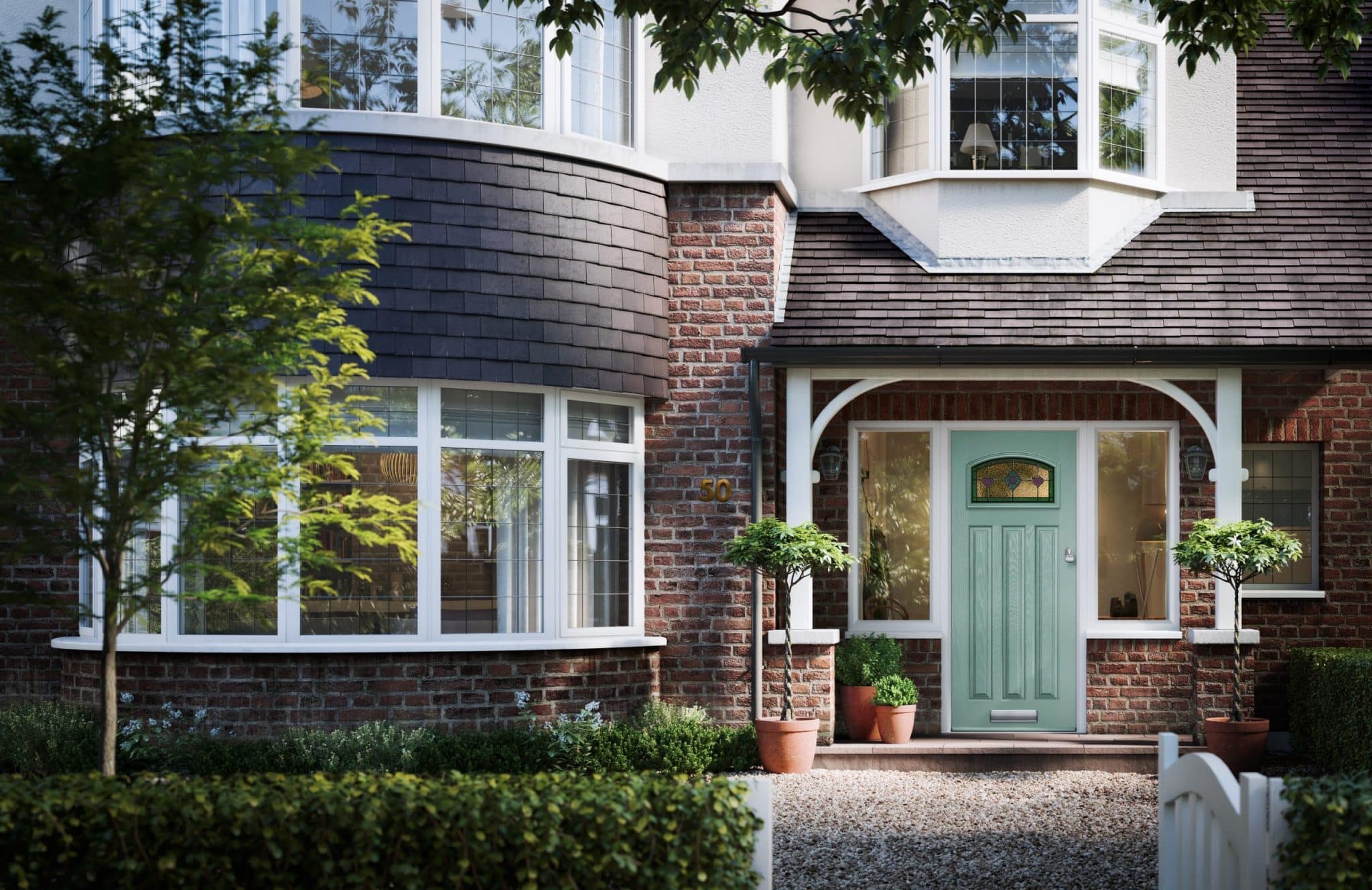
A quality composite door is one of the hardest exterior doors to force, and one of the warmest.
Ours are built to PAS 24, carry a 3-star anti-snap cylinder with TS007 protection and a multi-point lock, and hold a U-value of around 1.4 W/m²K thanks to a solid 48mm timber core wrapped in a tough GRP skin. That combination is why we fit so many of them across Cardiff and Caerphilly, and why insurers are happy to see one on your front elevation.
Colours and styles matter too, and you get plenty of both, but they come after the things that actually protect your family and cut your heating bills. As a rough guide, expect a fitted composite door from around 1,200 to 1,800 pounds depending on glazing, hardware and size. This page walks through the security, the warmth, the finishes and the price, so you can decide with real numbers rather than a sales pitch. If you already know you want one, you can book a free survey and we will measure up.
Book a free home survey and we will measure your opening, talk through security and colour options and give you a fixed price with no pressure.
It is real, provided the door is specified properly. Security on a composite door comes from four things working together: the cylinder, the lock, the slab and the frame. Get all four right and you have a door that resists the methods burglars actually use in South Wales, rather than one that only looks solid.
The single biggest weakness on any door is the euro cylinder, because lock snapping is quick and quiet. We fit a 3-star anti-snap cylinder that meets the Sold Secure Diamond standard and TS007 three-star rating, so the cylinder sacrifices a front section and keeps the working part locked if someone attacks it. Behind that sits a multi-point locking system, usually hooks plus a deadbolt and a latch, that pulls the door tight into the frame at several points down its height.
PAS 24 is the enhanced security test that a doorset has to pass to be considered burglar resistant. It puts the whole door, frame, glass, hinges and lock through mechanical and manual attack tests. A slab can look heavy and still fail if the frame or keeps are weak, so we quote the tested doorset, not a strong door bolted into a soft surround. If a builder or insurer asks for Secured by Design, that is the police-backed specification built on top of PAS 24, and we can supply it.
It is real, provided the door is specified properly. Security on a composite door comes from four things working together: the cylinder, the lock, the slab and the frame. Get all four right and you have a door that resists the methods burglars actually use in South Wales, rather than one that only looks solid.
The single biggest weakness on any door is the euro cylinder, because lock snapping is quick and quiet. We fit a 3-star anti-snap cylinder that meets the Sold Secure Diamond standard and TS007 three-star rating, so the cylinder sacrifices a front section and keeps the working part locked if someone attacks it. Behind that sits a multi-point locking system, usually hooks plus a deadbolt and a latch, that pulls the door tight into the frame at several points down its height.
PAS 24 is the enhanced security test that a doorset has to pass to be considered burglar resistant. It puts the whole door, frame, glass, hinges and lock through mechanical and manual attack tests. A slab can look heavy and still fail if the frame or keeps are weak, so we quote the tested doorset, not a strong door bolted into a soft surround. If a builder or insurer asks for Secured by Design, that is the police-backed specification built on top of PAS 24, and we can supply it.

A correctly fitted PAS 24 composite door is very hard to kick in, and that is largely down to the multi-point lock and the frame fixings rather than the slab alone. When you turn the key and lift the handle, hooks and a deadbolt bite into steel keeps that are screwed into a reinforced frame, which is itself fixed into the structural opening. A boot lands against a door that is held at the top, middle and bottom, so the force has nowhere easy to go.
The failures you read about almost always trace back to a cheap cylinder that was snapped, or a door hung in a weak frame with short screws into crumbling render. We measure the opening, pack and fix the frame properly, and specify the 3-star cylinder as standard. That is the difference between a door that passes a test in a lab and one that keeps working on a wet Tuesday night in Bargoed.
Warm. A modern composite door holds a U-value of around 1.4 W/m²K, and the lower that number, the less heat escapes. That comes from the make-up of the slab: a solid 48mm timber core, an insulating foam layer and a Glass Reinforced Plastic (GRP) outer skin, all far better at holding heat than a hollow or single-skin door.
For comparison, a tired timber door with gaps around it can leak heat badly and let draughts whistle through in winter. Swapping it for a composite door with brush and compression seals stops the draught and lifts the comfort of your hallway noticeably. If you are replacing several external openings at once, pairing the door with A-rated windows and, where relevant, our warmer glazed doors makes a real dent in your heating.
Draughts matter as much as the U-value in day to day comfort. An old door leaks heat around its edges as well as through the slab, so even a solid timber door can feel cold if the seals have failed. Our composite doors close onto continuous brush and compression seals that squash into place as the multi-point lock pulls the slab home, which stops the cold air track along the hall floor that so many older Cardiff and Caerphilly homes suffer from in winter.
Most of our composite doors take a double-glazed decorative unit, and you can specify warm-edge spacer bars and a low-emissivity coating so the glass panel does not become the cold spot. If the door faces a road or a shared path, laminated or obscure glass adds privacy and makes the glazed section harder to break through. We will talk you through the trade-off between light, privacy and security on your survey.

Both have their place. A uPVC door is lighter and cheaper, and for a rarely used side or utility entrance it can be the sensible choice. For a front door that takes daily use, weather and the odd shoulder from a delivery, a composite door is stronger, warmer and feels far more solid when you close it.
The 48mm solid core is the honest difference. A uPVC door is typically hollow with internal chambers, whereas the composite slab is dense all the way through, which is why it resists impact and holds its shape better in the sun. If budget is tight, we can mix and match: a composite front door where it counts, and uPVC elsewhere. Browse the full range on our doors hub to see how they sit side by side.
Mix and match to budget: composite where it counts, uPVC elsewhere. See all types on our doors hub.
Book a Free Survey
This is the classic timber-door complaint, and it is exactly what the GRP skin is designed to solve. Glass Reinforced Plastic does not absorb water, so the slab will not swell in the wet or shrink and crack in a dry spell, and there is no annual sand-and-repaint ritual. A wipe with warm soapy water two or three times a year keeps it looking new.
Colour is baked into and through the skin rather than painted on, so it resists fading from UV far better than a coat of gloss. South-facing doors in exposed spots such as parts of Caerphilly mountain will see some very gradual mellowing over many years, as any surface does, but you will not get the peeling and blistering that plagues painted timber. That durability is a large part of why the through-life cost of a composite door is lower than a cheaper door you keep repairing.
Plenty, and this is where you get to make the door yours. Popular colours include Anthracite Grey, Chartwell Green, racing greens, deep blues, black and classic red, in a smooth or woodgrain finish. You choose the door style (contemporary, cottage, traditional four-panel), the glazing design, and the hardware finish for the handle, letterplate, knocker and numerals in chrome, black, satin or gold tones.
Because the colour and furniture change the look completely, it helps to see finished doors rather than a swatch. Take a look at our gallery for real installs on homes around Cardiff and the Valleys, then we can match a style to your property on the survey. A modern grey slab suits a new-build in Ystrad Mynach, while a woodgrain cottage door flatters an older stone frontage in Rhiwbina.
The trick is proportion and colour balance. On a period property we often pair a heritage colour with a traditional panel layout and a chrome or black letterplate. On a contemporary house a long bar handle and a plain or linear-glazed slab looks right. If you are updating the whole frontage, we can colour-match the door to new windows so the elevation reads as one considered scheme rather than a set of separate jobs.
As a guide, a supplied and fitted composite door runs from around 1,200 to 1,800 pounds, with most standard front doors landing in the middle of that band. The variables are size, the amount and type of glass, the hardware you pick and whether the opening needs any making good after the old frame comes out.
That price includes removing your old door, fitting the new doorset level and secure, sealing it against the weather and taking the waste away. We give you a fixed, written quote after a free survey so there are no surprises on the day. If you are weighing a door up against a bigger glazed opening at the back of the house, our bifold doors and patio doors pages set out those costs so you can plan the whole project.
Self-certified against Building Regulations. Notified for you. Certificate for when you sell.
Covers the door and the installation. Over 30 years fitting doors in South Wales stands behind it.
Multi-point lock and 3-star cylinder as standard. Secured by Design available on request.
Every composite door we fit comes with a written guarantee covering the door and the installation, and because we are FENSA registered the work is self-certified against Building Regulations and notified for you. Over 30 years fitting doors across South Wales stands behind that paperwork.
On insurance, most home policies simply want a door with a multi-point lock and, increasingly, a 3-star anti-snap cylinder, both of which we fit as standard. If your insurer specifies Secured by Design, tell us at survey and we will quote the accredited doorset. Getting the specification right can keep your premium down and, more to the point, keeps intruders out.
It is worth keeping your paperwork safe, because the FENSA certificate is proof the work met Building Regulations when you come to sell the house. Buyers and their solicitors ask for it, and having the certificate for your door and any windows we fit keeps a sale moving rather than stalling on missing compliance documents.
Two real jobs from our Caerphilly team — one period property, one new-build.

The owners had an original timber front door that stuck in winter, rattled in wind and let a cold draught into the hall. They wanted something secure and warm that still suited the age of the house. We fitted a woodgrain composite door in a heritage green with a traditional panel, a chrome letterplate and a 3-star anti-snap cylinder on a multi-point lock, glazed with an obscure decorative unit for privacy from the street.
The hallway stopped being the cold part of the house, the door closed with a solid clunk rather than a rattle, and the couple kept the character of the frontage. The job, including removing the old door and making good the reveal, sat around the middle of the guide price band and was completed in a single day.
A family in a recent development near Cardiff needed to replace a builder-grade front door that felt flimsy and failed to meet the security wording on their home insurance. They chose a smooth Anthracite Grey composite door with a long black bar handle and a discreet glazed side to bring light into the entrance hall.
We specified a Secured by Design doorset with a 3-star cylinder to satisfy the insurer, fixed the frame into the structural opening properly and sealed it against the prevailing weather. The upgrade cost sat toward the upper part of the guide range because of the contemporary hardware and glazing, and the insurer accepted the specification without further questions.

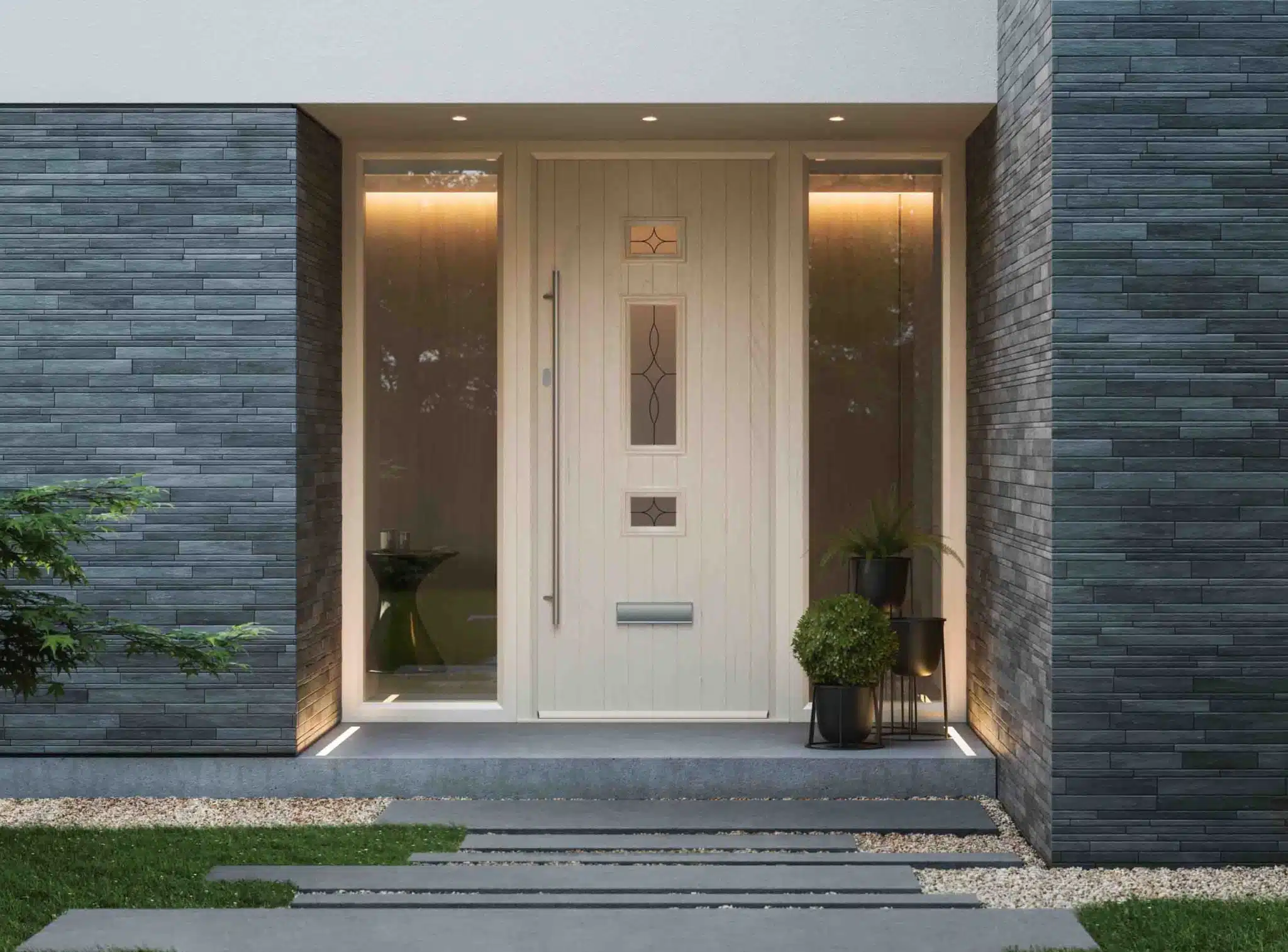
Common questions about composite door security, cost, durability and our coverage across Cardiff and Caerphilly.
Book a free home survey and we will measure up, talk through security and colour options and give you a fixed price for a composite door fitted across Cardiff and Caerphilly.
Fill in the form and we will be in touch to arrange a visit — no charge, no obligation.

Family-run installer of windows, doors and conservatories across Caerphilly, Cardiff and South Wales. FENSA registered, IWA deposit protected, 30+ years fitting quality glazing.