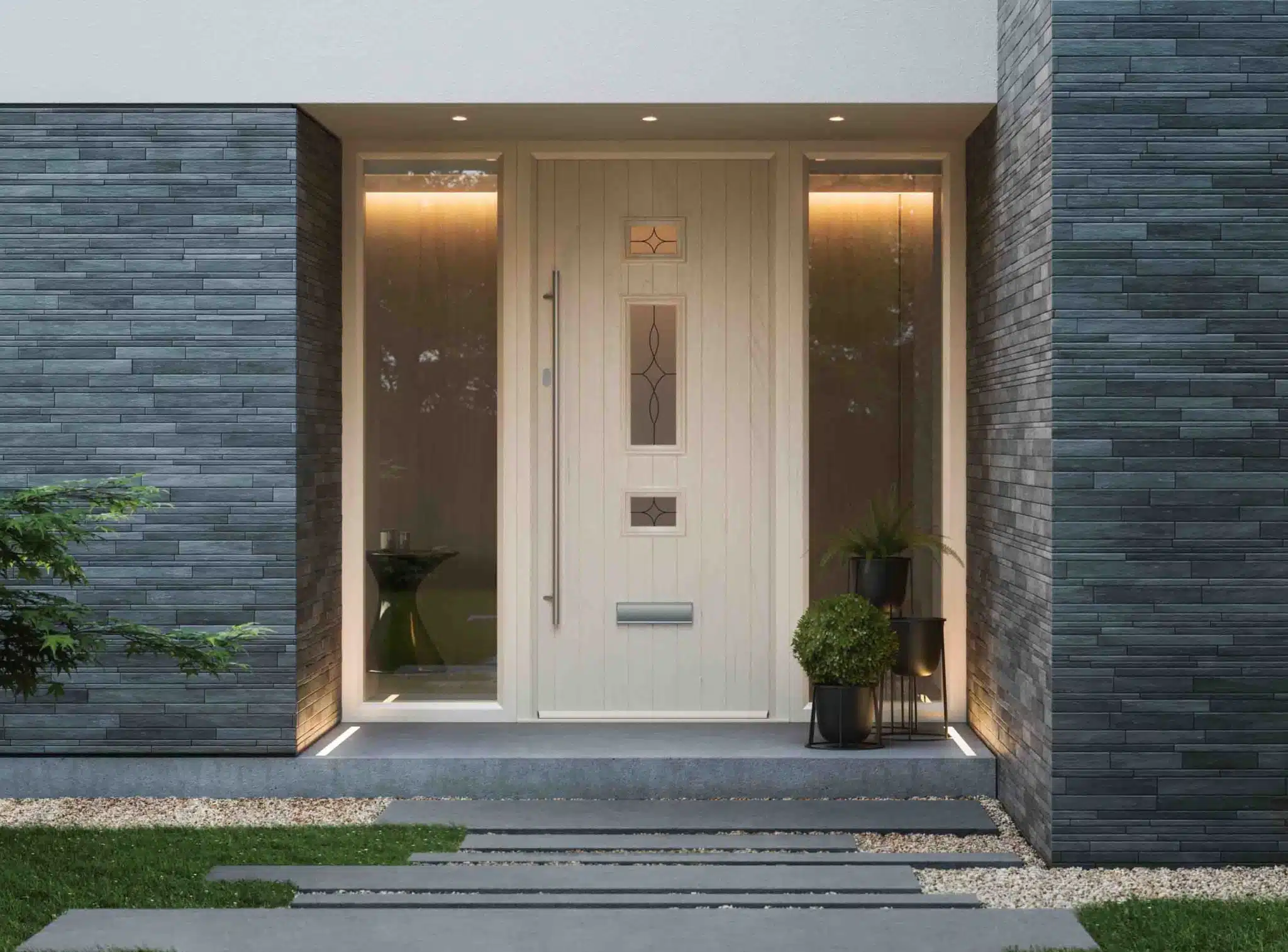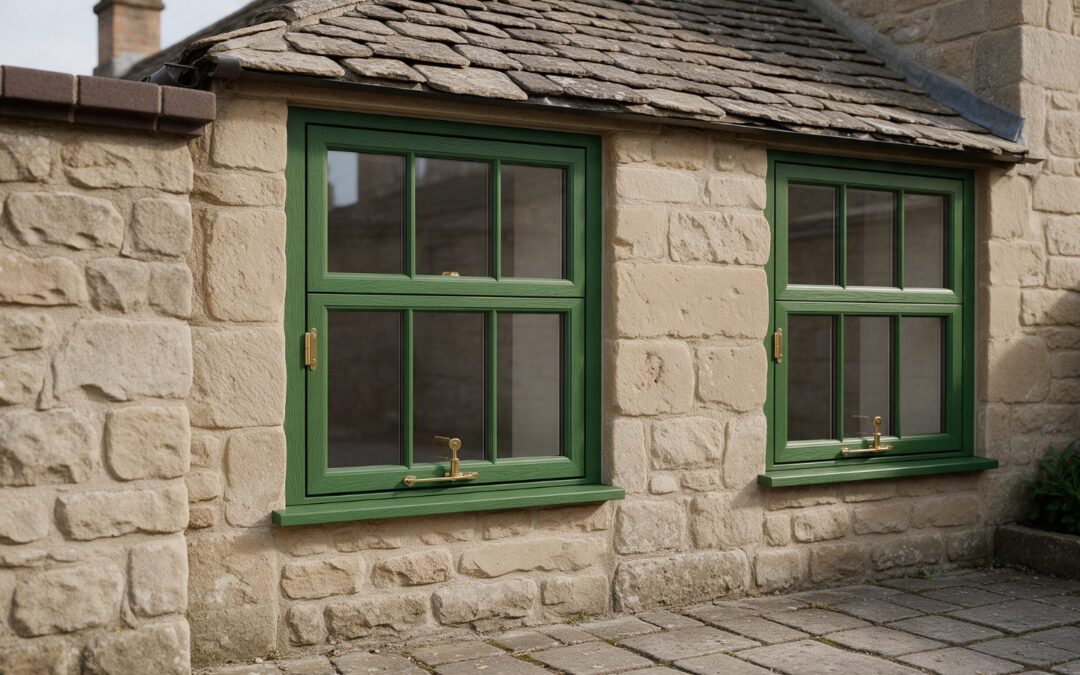
Flush sash windows sit level with their frame and look like painted timber, while standard casement windows step out from the frame and cost less. Daimant, the family-run installer based in Caerphilly, fits both across Cardiff and Caerphilly, with A-rated glazing and PAS 24 locking on either choice.
- FENSA registered
- 10-year insurance-backed guarantee
- Fixed written quote
- Our own Caerphilly fitting team
Fitted by our own Caerphilly team


What is the difference between flush sash and casement windows?
The difference between flush sash and casement windows is where the opening part sits: a flush sash closes level with the outer frame in one flat plane, while a standard casement sash sits proud of the frame and casts a shadow line. Both open on side or top hinges.
That small step is what makes a window read as modern plastic from the street. Remove it, and the eye reads the window as a painted timber casement, which is how Victorian and Edwardian joinery was made. On a period house, the choice decides how the whole front looks. On a 1970s semi, it makes far less difference, and a standard uPVC casement window is the natural fit.
| Flush sash | Standard casement | |
|---|---|---|
| Sash position when closed | Level with the frame | Steps out from the frame |
| Look from the street | Painted timber casement | Modern uPVC |
| Corner joints | Mechanically jointed, no weld line | Usually welded |
| Energy rating we fit | A-rated, U-value 1.2 to 1.4 W/m²K | A-rated, U-value around 1.2 W/m²K |
| Security we fit | PAS 24 | PAS 24 |
| Price | Costs more than a standard casement | The lower cost option |
What a flush sash looks like up close
Up close, three details give a flush sash its timber look. The corners are mechanically jointed rather than welded, so there is no raised weld line running across each corner. The frame and sash share one flat face, so light falls evenly across the window instead of catching on a step. And the finish can be a woodgrain foil with a raised grain you can feel, in a heritage colour.
A standard casement is made the opposite way. The corners are welded and cleaned back, which leaves a fine line, and the sash stands forward of the frame by several millimetres. On a modern house those details look crisp and tidy. On an old stone cottage or a bay-fronted terrace, they are the giveaway that the windows are new plastic.
- Flush sash windows close level with the frame and look like timber; standard casements step out and look modern.
- Both types we fit are A-rated and built to PAS 24, so the choice is about looks, not warmth or security.
- A flush sash costs more than a standard casement but far less than real timber, and never needs repainting.
- Period homes and conservation areas usually suit flush sash; 1960s to 1990s houses and new builds usually suit casements.
- You can mix them: flush sash on the front, standard casements at the back.
Knowing how they differ is the easy part. The harder question is which one suits the house you live in, and that depends mostly on when it was built.
Which window looks right on your house?
Flush sash windows look right on houses built before about 1930, and on any home where the original windows were timber casements. Standard casement windows look right on most houses built from the 1950s onwards, where a uPVC window is what the architect would have expected.
The mistake to avoid is fitting the cheapest window on the front of a period house and finding it looks wrong for the next twenty years. Stand across the road from your house and look at the neighbours. Those that kept the timber look usually still read as a matching street; those with chunky white frames tend to stand out.
Victorian and Edwardian terraces
Terraces in Cardiff suburbs such as Roath, Canton and Cathays, and stone cottages across the Caerphilly valleys, were built with timber windows. Where the originals were side-hung casements, a flush sash is the closest match. Where the originals were box sashes that slide up and down, a vertical sliding sash window is the right replacement instead.
1930s semis
Houses from the 1930s often had timber or steel casements with small panes. A flush sash in a soft heritage colour keeps that character. A standard casement also works well here, particularly at the back of the house.
Post-war houses and new builds
Houses from the 1950s to today were designed around casement windows, and a standard casement suits them. Spending more on flush sash here buys a look the house never had.
Are flush sash windows as warm and secure as casement windows?
Flush sash windows are as warm and secure as standard casement windows when both are specified properly. The flush sash and casement windows we fit are A-rated, with warm-edge spacers, argon-filled units and low-emissivity glass, and both are built to the PAS 24 security standard.
People sometimes assume a window made to look old performs like an old window. It does not. The heritage look comes from the shape of the frame and the finish on its face, and the glass unit behind it is the same modern sealed unit. Swapping tired single glazing for an A-rated unit typically takes a window from a U-value near 5.0 to around 1.2 W/m²K, which is the change an energy assessor rewards. Our guide on whether new windows improve your EPC explains how that shows up on your certificate.
Security on both types
Both types use multi-point locking and are tested as a complete window to PAS 24. A burglar looks for an old window that levers open easily, and a PAS 24 window is designed to resist exactly that. You get the same locks on a flush sash as on a casement, so the decision stays about appearance.
With warmth and security off the table, the choice comes down to two things: how the window looks and what it costs. Price is usually the deciding factor, so that comes next.

How much more do flush sash windows cost than casements?
Flush sash windows cost more than standard casement windows, because the frame is more complex and the corners are mechanically jointed rather than welded, but they cost far less than genuine timber windows. Checkatrade’s July 2026 guide puts a uPVC casement at about £350 to £520 per window, supplied and fitted.
That casement figure is a useful floor for comparison. Checkatrade estimates a typical three-bedroom house with around twelve casement windows at about £7,500. A flush sash on the same house adds to that, and how much depends on the number of windows, their size and the colour you choose. Your own figure comes from a survey, and our window replacement cost guide for Cardiff covers the other things that move a price.
Lower upkeep over the years
Timber windows need sanding and repainting every few years, and they swell and stick in a wet Welsh winter. A flush sash in a woodgrain foil gives you the timber look without that upkeep. Over the life of the windows, the running cost of a flush sash is close to zero: a wipe with warm soapy water keeps it clean.
Where the extra spend earns its keep
Spend on flush sash where people see it: the front of a period house, or any elevation facing a street in a conservation area. At the back, where only you see the windows, a standard casement saves money with no loss of warmth or security.
Which windows are accepted in a conservation area?
Conservation areas in Cardiff and Caerphilly can restrict window changes, and flush sash windows are usually the closer match to the original timber than standard casements. Cardiff has 27 conservation areas, many with Article 4 Directions controlling minor changes such as windows, including Roath Park and Llandaff.
An Article 4 Direction removes the right to change windows without planning permission, so what is accepted depends on the rules for your street. Check with the council before ordering anything. Caerphilly County Borough Council also designates conservation areas and publishes a map of them.
A flush face, slim frames, woodgrain foil and a heritage colour such as Chartwell Green or Agate Grey give you the best chance of a window that matches the character of the area. We advise on this on the survey. Our guide to uPVC sash windows in a Cardiff conservation area goes through Article 4 and listed buildings in more detail.
Can you mix flush sash and casement windows on one house?
You can mix flush sash and casement windows on one house, and putting flush sash on the front elevation with standard casements at the back balances looks and cost. The windows match in colour and glass, so the difference is only visible up close.
This works best when the front and back are rarely seen together, as on most terraces and semis. On a detached house where the side is visible from the road, carry the flush sash round the corner so the change does not land in the middle of an elevation. We draw this out on the survey so you can see where each type goes, whether the house is in Caerphilly, Cardiff, Penarth, Barry, Bridgend or Pontypridd.

How do you choose between flush sash and casement windows?
Choose between flush sash and casement windows by looking at the age of your house, what the original windows were, the rules on your street and your budget, in that order. Work through these steps before the survey and the decision takes minutes.
Find out what was there first
Look at old photos, neighbouring houses that kept their originals, or the window openings themselves. Side-hung timber casements point to flush sash; sliding box sashes point to a sliding sash window.
Check your street’s rules
Ask the council whether your home is in a conservation area or covered by an Article 4 Direction, and whether it is listed.
Split front and back
List which windows face the street and which do not. That tells you where flush sash earns its extra cost.
Pick a colour and finish
Choose a heritage colour or woodgrain finish for the flush sash windows, and a colour for any casements. Ask to see samples in daylight against your brick or stone.
Get a fixed written quote
Book a free survey. We bring flush sash samples and colour swatches to your home and give you a fixed price for each option.
Seeing the two side by side on your own wall settles most of this. For the full specification, colours and finishes, start with our flush sash windows in Cardiff and Caerphilly page, then book the survey and see both on your own wall.
Frequently asked questions
No. A flush sash is a casement that opens on hinges and closes level with the frame. A traditional sash window slides up and down, and its uPVC replacement is a vertical sliding sash.
Flush sash comes in woodgrain foils and heritage colours such as Chartwell Green and Agate Grey. We bring colour swatches to the survey.
You can, and some owners like the softer look. On most new builds a standard casement suits the design and costs less.
No more than a casement. A wipe with warm soapy water a few times a year keeps the frames clean, and they never need painting.
Yes. The survey is free, and the quote that follows is fixed, in writing and with no obligation to go ahead.